Strategy · Infrastructure · Systems
Delay Debt
Why Waiting Is Not Neutral
Somewhere today, a board will postpone the expansion of a terminal. Passenger forecasts remain uncertain, financing conditions have deteriorated, and the case for immediate construction appears insufficiently secure.
The decision will be deferred for twelve months. Capital will remain uncommitted. Exposure will appear contained.
The project team will archive the latest forecasts. The financial model will remain on the shared drive, ready to be reopened when conditions improve. No one leaving the room will feel that anything has been lost. The terminal has not been rejected. It has merely been postponed.

Outside the room, nothing has been postponed.
An airline will assign its next aircraft elsewhere. A logistics operator will extend an agreement with another hub. Suppliers will organise around the traffic already moving through the system. Technical teams will commit themselves to projects that have entered execution rather than those still awaiting certainty.
When the terminal returns to the agenda, it may still be possible to build it.
But the traffic it was intended to capture may no longer be waiting.
Institutions are designed to measure the visible cost of action: the capital committed, the exposure assumed, the liability that might appear in the next reporting period. They are far less capable of measuring the position surrendered during a period of apparent inactivity.
In the minutes, postponement may not even register as a decision. No money has been spent. No project has failed. No executive is required to defend a visible loss.
Yet routes are allocated. Contracts acquire duration. Engineers join projects that have already begun. Suppliers deepen relationships with the demand they can see rather than the demand that may one day return. Customers organise their behaviour around the systems already available to them.
What appears inside the institution as a pause is experienced outside it as available time.
A year later, many of the same people may return to the same room. The terminal remains on the plan. The slides look familiar. The investment is still technically viable.
The opportunity is not the same.
A terminal has no strategic value in isolation. Its value is produced by the routes, schedules, passenger habits, commercial agreements and transfer patterns that surround it. Concrete can still be poured. Gates can still be added. But network position cannot be stored beside the original plans.
The asset remains possible while the relationships that would have made it valuable begin to consolidate elsewhere.
The institution believes it has preserved an option. In reality, it has preserved only the formal ability to act.
The difference may remain invisible for some time. Nothing disappears at once. The site is still owned. The design remains valid. The market has not formally closed. Each element of the original proposition can still be found.
What changes first is not possibility, but position.
A competing airport gains the route. The route creates frequency. Frequency attracts passengers. Passenger volume supports additional services. Those services make the hub more useful to the next airline considering where to deploy scarce aircraft.
The postponed decision does not remain still while the institution waits to recover certainty. Its surrounding value begins to migrate.
At first, postponement preserves capital without visibly damaging the project. Then capacity is reserved elsewhere, relationships acquire duration, and operational knowledge becomes embedded in competing systems. The option remains open, but exercising it becomes more expensive. Eventually, the institution discovers that it can still build the asset, but can no longer recover the position that once justified it.
The project survives.
Its original advantage does not.
On the ground, the same liability accumulates through a different mechanism.
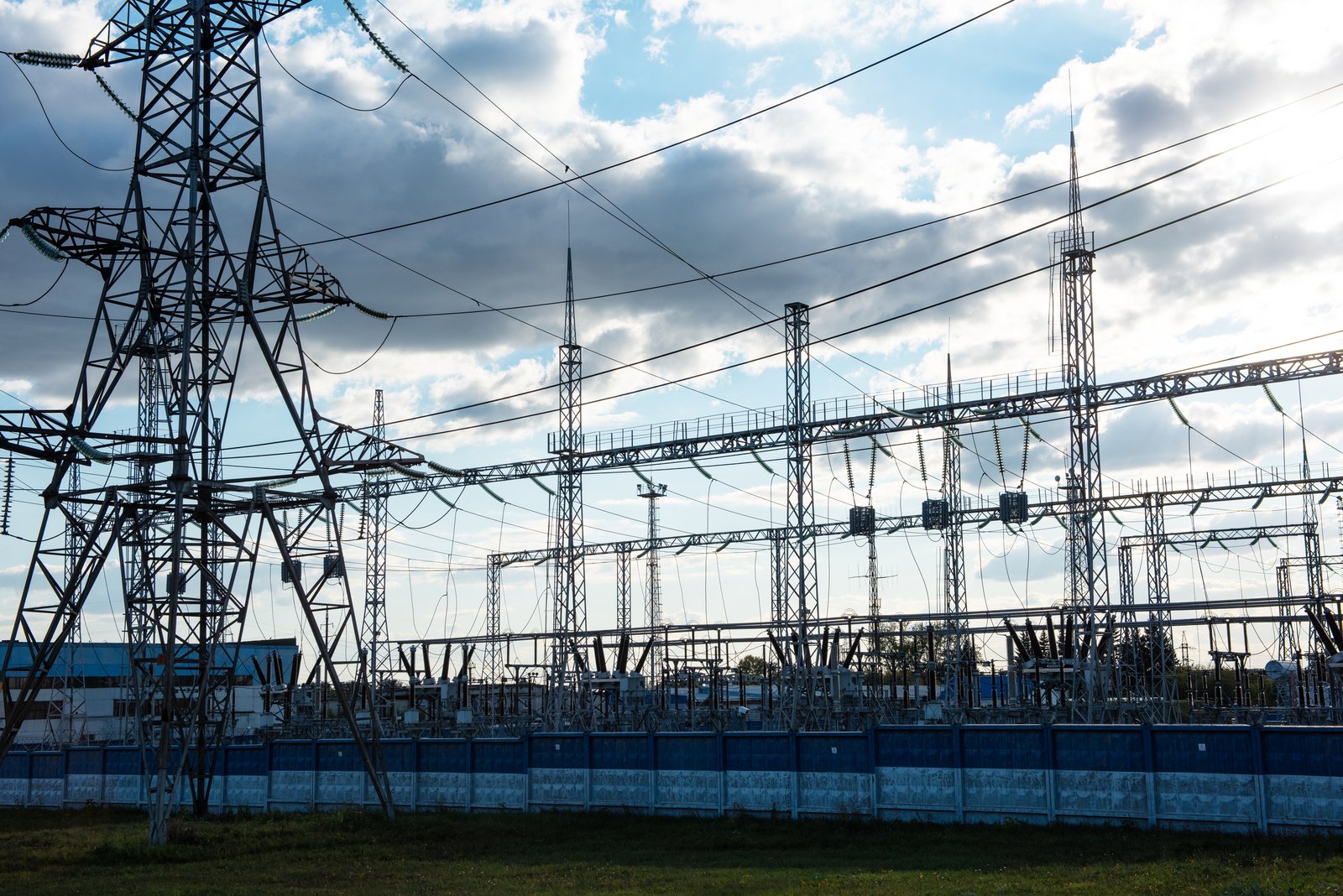
An electricity connection delayed today does not wait outside an unchanged network. It enters a system in which other generators, storage projects, data centres, factories and housing developments continue to request capacity.
In March 2024, Ofgem reported that Great Britain's transmission and distribution connection queue had reached approximately 701 gigawatts and could approach 800 gigawatts by the end of that year. The volume was more than four times the electricity generation capacity projected to be required by 2050.
The British government later reported that some companies were facing connection waits of up to fifteen years and that the queue had grown tenfold over five years.
These figures describe more than administrative inefficiency. They reveal how delay changes the conditions of access.
A project postponed when capacity appears difficult to obtain does not simply return to claim the same place later. It returns behind projects that entered the system during its absence. Engineering resources have been assigned. Substations require reinforcement. Equipment lead times have lengthened. Some connection points have become strategically contested.
In aviation, delay weakens a position inside a network.
In electricity, it worsens a position inside a queue.
The difference matters. A network position is lost through the consolidation of relationships elsewhere. A queue position deteriorates because claims continue accumulating ahead of the delayed project.
In both cases, the institution retains the legal or technical possibility of acting. What it loses is the ability to act on the original terms.
This is why delay can remain rational at every meeting and destructive across the sequence of meetings.
Each committee sees only the additional uncertainty before it. Each postponement appears limited. Each request for more evidence sounds prudent. Yet the surrounding system continues to allocate scarce capacity without waiting for internal certainty to become complete.
By the time the institution acts, the cost of entry has changed.
Delay possesses a structural advantage within governance systems because its early consequences are distributed. A failed investment produces a visible loss, an accountable sponsor and a date on which the decision was approved. A missed position is harder to locate. Its effects emerge across years, departments and leadership cycles.
No single meeting lost the route.
No single executive lengthened the queue.
No single postponement explains why the capability now costs more to acquire.
Responsibility dissolves as the debt compounds.
Conventional accounting strengthens the asymmetry. It records the capital preserved by deferral but not the optionality that expires while the decision remains open. There is no line for a supplier relationship allowed to deepen elsewhere, an engineer recruited by a competitor, a standard shaped in the institution's absence, or a customer habit that becomes expensive to reverse.
The absence of expenditure is treated as evidence that no loss has occurred.
This is often precisely when the loss is being created.
Delay Debt is the liability created when an institution preserves capital by postponing action but loses the conditions that would have made that action valuable.
The principal is the decision deferred.
The interest is everything that reorganises while the institution waits.
That interest rarely appears as a single charge. It arrives through higher construction costs, weaker negotiating power, longer lead times, lost traffic, harder recruitment and the expense of persuading partners to reconsider arrangements that have already become normal elsewhere.
The definition is narrower than the familiar claim that time has a cost. Time alone does not create Delay Debt. The debt emerges when the surrounding environment is capable of reallocating position, capacity or capability during the interval of postponement.
Where nothing important changes, waiting may remain neutral.
Where systems are relational, congested or cumulative, it rarely is.
The debt becomes visible when the institution returns and discovers that restoration requires more than the expenditure originally deferred. Capital must now compensate for lost relationships, congested access, diminished bargaining power or years of capability accumulated elsewhere.
The institution did not avoid payment. It changed the timing and terms of payment.
What could once have been built progressively must now be acquired urgently.
What could once have been negotiated from strength must now be recovered through concessions.
What could once have been learned internally must now be purchased from those who spent the intervening years learning first.
Delay becomes strategically irreversible not when action is no longer possible, but when money alone can no longer restore the conditions that postponement allowed to disappear.
A terminal can still be built after its intended traffic has reorganised around another hub. A grid connection can still be secured after years inside a congested queue. A factory can still be financed after the relevant industrial ecosystem has concentrated elsewhere.
The visible asset remains obtainable.
The embedded advantage does not.
If Delay Debt is the liability accumulated by the institution that waits, its counterpart is the advantage accumulated by the system that continues to move.
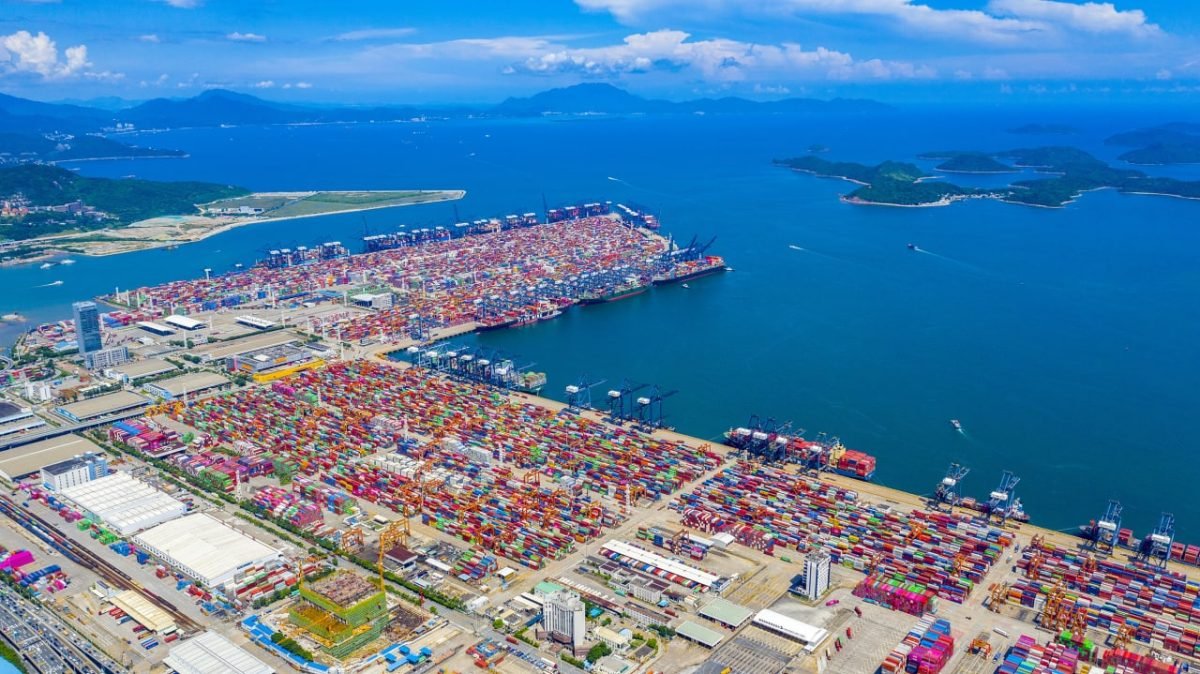
Shenzhen shows what that counterpart looks like in practice.
Its rise was not the product of a single investment or one moment of administrative foresight. Established in March 1979 and designated China's first special economic zone in August 1980, Shenzhen began its transformation beside Hong Kong, with access to capital, trade and professional services.
The new status produced an early concentration of investment. In 1981, China's first four special economic zones received 59.8 per cent of the country's foreign direct investment, with Shenzhen alone accounting for 50.6 per cent.
But special status was only the beginning.
Factories attracted suppliers. Suppliers reduced production friction. Production created demand for logistics, finance and technical labour. Engineers acquired knowledge through repetition. Firms could redesign, source, prototype and manufacture within increasingly dense networks of capability.
Each layer made the next layer easier to build.
Infrastructure does not merely support production; production thickens the infrastructure around it. A supplier is not only a vendor; it becomes part of the knowledge available to the next company entering the system. Technical labour is not simply employed; it circulates, carrying process knowledge from one institution to another.
Time, under these conditions, compounds.
One side uses the interval to request additional certainty. The other uses it to increase density.
One retains capital.
The other acquires position.
Shenzhen therefore belongs at the centre of Delay Debt, not at its margins. It reveals that the debt created by postponement does not remain entirely with the actor who waits. Part of it is converted into advantage elsewhere.
The route assigned to another hub strengthens that hub's network. The supplier contract signed elsewhere supports another industrial cluster. The engineer who leaves a deferred programme adds capability to a project already under way. The standard left unshaped becomes embedded in a system designed by someone else.
The institution does not merely lose time.
It finances another actor's accumulation.
This does not require a direct transfer of money or a conscious competitor exploiting every delay. The transfer occurs through the ordinary allocation of scarce resources. Aircraft go where routes are ready. Engineers join projects that exist. Suppliers organise around visible demand. Capital prefers systems already capable of absorbing it.
The geography of delay and the geography of advantage are often the same map viewed from opposite sides.
In one location, meetings continue. Forecasts are revised. Risk is reduced to the extent that risk can be reduced on paper.
In another, relationships deepen, routines form, and the future acquires an address.
When the board finally reconvenes, the decision may appear remarkably similar to the one it postponed. The same terminal. The same ambition. The same language of long-term growth.
What has changed is everything the original model treated as background.
The aircraft have moved. The queue has lengthened. The suppliers have committed themselves. The engineers have learned elsewhere. The capabilities surrounding the project now belong to institutions that did not wait.
The board believed it had deferred an investment.
In reality, it had deferred its claim on a position.
The cost of action is visible at the moment of decision.
The cost of waiting becomes visible only after the future has chosen another destination.
— The Dubai Curator
Selected Sources
Ofgem — Electricity Transmission and Distribution Connection Queue Data
Regulatory reporting on the scale of Great Britain's electricity connection queue and the institutional reforms intended to accelerate viable projects.
UK Government — Electricity Network Connection Reform
Official reporting on connection delays, the growth of the queue and the prioritisation of projects considered ready and strategically necessary.
World Bank — How Do Special Economic Zones and Industrial Clusters Drive China's Rapid Development?
Historical analysis of Shenzhen's early development, foreign direct investment and the role of special economic zones in creating cumulative industrial advantage.
Shenzhen Municipal Government — Shenzhen Profile
Official records documenting the city's establishment, designation as China's first special economic zone and long-term transformation into an industrial and technological centre.
Airports Council International — Airport Economics and Network Development
Research concerning airport infrastructure, route development, connectivity and the network dynamics through which hub advantages accumulate.
International Energy Agency — Electricity Grids and Secure Energy Transitions
Analysis of electricity network investment, infrastructure bottlenecks and the growing importance of grid capacity to industrial and energy-system development.
OECD — Infrastructure Governance and Long-Term Investment
Frameworks examining how institutional governance, investment timing and public decision-making shape the performance of long-cycle infrastructure.
Author's Note
Questions for Future Research
Can Delay Debt be measured before lost position becomes visible? — Most institutions recognise strategic loss only after position has deteriorated. A measurement framework would need to identify leading indicators of eroding access, relationships and capability.
Which infrastructure systems accumulate Delay Debt most rapidly? — Systems with long lead times, concentrated capacity allocation and cumulative capability development may be most vulnerable to the compounding effects of postponement.
How can institutions distinguish prudent patience from strategically costly postponement? — The boundary between preserving optionality and surrendering position is rarely visible at the moment of decision. Frameworks that compare the carrying cost of waiting against the cost of lost access could inform institutional judgment.
Can governance frameworks estimate the compounding cost of deferred decisions? — Current appraisal methods capture the visible cost of action more precisely than the distributed cost of inaction. New approaches could make the compounding effects of delay more visible to decision-makers.
At what point does nominal optionality cease to represent recoverable strategic choice? — The transition from genuine optionality to nominal optionality may be measurable through changes in access cost, partner availability and capability requirements.
Under what conditions does Delay Debt become strategically irreversible? — Irreversibility may depend not on whether an asset can still be built, but on whether the surrounding conditions that made it valuable can still be recovered at acceptable cost.
Related Concepts
Delay Debt — The liability created when an institution preserves capital by postponing action but loses the conditions that originally made that action valuable.
Strategic Position — The relative advantage created by access, relationships, timing and embedded capability within a wider system.
Nominal Optionality — The appearance that a decision remains available after the conditions that once made it valuable have deteriorated.
Cumulative Advantage — The process through which early activity generates capabilities, relationships and infrastructure that make subsequent gains easier to secure.
Curated Sovereignty examines strategic questions whose answers are still emerging.