Strategy · Allocation · Infrastructure
The Cost of Time
Why the Most Expensive Decisions Rarely Look Expensive When They Are Made

Somewhere this morning, a board will postpone a decision that appears too expensive to make.
The proposal may concern an aircraft programme, a transmission network, a semiconductor facility, a logistics corridor or an industrial capability whose value will not become visible for years.
The financial case will be reviewed carefully. Demand will be questioned. Capital expenditure will be challenged. Forecasts will be discounted. Management will be asked whether the organisation can wait for greater certainty.
Waiting will appear prudent. No asset will immediately disappear. No factory will stop. No route will close. No balance sheet will register a new liability. The decision will simply be deferred.
Yet from that moment, time will begin to alter the economics of every available option. Construction costs may rise. Suppliers may commit their capacity elsewhere. Skilled teams may disperse. Regulatory windows may narrow. Competitors may accumulate operating experience. Infrastructure surrounding the proposed asset may develop in another geography.
Nothing dramatic needs to happen. The strategic position can deteriorate while the financial position appears unchanged.
This is one of the central errors of modern allocation: organisations measure the cost of acting more precisely than the cost of waiting. They record expenditure when capital is committed. They rarely record the optionality lost while commitment is withheld.
The result is a recurring form of mispricing. The most expensive decisions often look inexpensive when they are made because their real cost is transferred into the future.
I. Temporal Mispricing
Most investment models treat time as a variable applied to money. Future cash flows are discounted. Financing costs are calculated. Construction schedules are estimated. Payback periods are compared.
But time does more than reduce the present value of future income. It changes the strategic environment in which the investment must eventually operate.
A project postponed for five years is not necessarily the same project beginning five years later. Its cost base may have changed. Its supply chain may have tightened. Its political legitimacy may have weakened. Its technical requirements may have expanded. Its most experienced operators may have retired. Its location may no longer command the same access. Its competitors may already possess the knowledge that can only be acquired through use.
The calendar therefore does not merely delay execution. It can transform the object being evaluated.
Temporal Mispricing occurs when a decision recognises the visible cost of acting today but fails to price the structural consequences of acting later.
The mistake is understandable. Immediate expenditure is measurable, attributable and politically exposed. A deferred consequence is dispersed across future budgets, future administrations and future management teams.
The cost of a new transmission line appears as capital expenditure. The cost of insufficient grid capacity appears later as congestion, delayed connections, lost investment, reduced reliability and emergency intervention. The cost of developing industrial capability appears in the present. The cost of dependence appears only when access becomes restricted, demand accelerates or a supplier acquires leverage. The cost of ordering capacity appears on the balance sheet. The cost of discovering that no capacity remains available appears years later, when demand can no longer be served.
Accounting sees the first category more easily than the second. Governance often does the same.
This creates an institutional preference for decisions whose costs are immediate but small, even when their cumulative consequences are larger than the commitment they were designed to avoid. A decision may therefore be financially rational within the period being measured and strategically destructive across the period that matters.
II. Delay Is Not Inaction
Postponement is usually described as the absence of a decision. It is not.
To delay is to allocate time to the existing structure. It extends the life of current assets. It preserves current dependencies. It allows existing suppliers to retain their position. It gives competitors more time to learn. It permits the surrounding system to develop without the capability under consideration.
Every deferred decision therefore contains an implicit commitment. The organisation may not have approved a new direction, but it has approved the continuation of the old one.
This distinction matters because the status quo is rarely static. Assets age. Demand shifts. Regulation advances. Skills migrate. Infrastructure becomes congested. Alternative locations improve. The decision-maker who waits for certainty is not observing the future from outside it. The institution continues to move through time, accumulating constraints while the formal decision remains open.
Delay can be prudent when uncertainty is genuinely reversible and when options remain available. But many strategic decisions do not offer this protection. Their inputs are scarce. Their delivery periods are long. Their surrounding ecosystems require years to form. Their value depends on beginning before the need becomes obvious.
Once demand is visible to everyone, the best sites, suppliers, people and regulatory attention may already have been allocated. The future then becomes more expensive precisely because it has become easier to justify.
III. Optionality Has a Half-Life
Optionality is often treated as something preserved by waiting. In liquid markets, this may be true. Capital that has not been committed remains available for another use.
But strategic optionality is not held in cash alone. It depends on access. Access to land. Access to equipment. Access to engineering capacity. Access to skilled labour. Access to licences. Access to political attention. Access to infrastructure. Access to the confidence of suppliers and partners who must decide whether an institution is serious enough to build around.
These forms of access can decay even while capital remains untouched. An organisation may retain the money required for a project yet lose the practical ability to deliver it under acceptable conditions.
This is why optionality has a half-life. At first, delay may preserve flexibility. Later, it begins to remove alternatives. A suitable site is acquired by another investor. A specialist supplier extends its order book. A generation of engineers leaves without transferring its knowledge. A corridor develops around a competing hub. A regulatory framework becomes more restrictive. A partner builds deeper relationships elsewhere.
The organisation still possesses a theoretical choice, but the quality of that choice has deteriorated. What remains is nominal optionality: the appearance of freedom after the conditions required to exercise it have already weakened.
True optionality is not the number of options listed in a presentation. It is the number of options that remain executable at the required scale, within the required time and without unacceptable dependence. Strategic delay becomes expensive when nominal optionality survives longer than real optionality. By the time the distinction is recognised, the institution may still be free to act—but only at a higher price, under greater pressure and with fewer partners.
IV. The Irreversibility of Infrastructure
Infrastructure makes temporal mispricing especially dangerous because its effects extend beyond the asset itself.
A transmission network, port, airport, railway, data corridor or industrial zone reorganises activity around it. Once built, it influences where companies locate, where skills concentrate, where housing develops, where suppliers invest and where future infrastructure becomes economical. Its absence also reorganises activity. Demand does not remain suspended while a jurisdiction waits. It tends to migrate towards places capable of receiving it.
The decision to delay infrastructure is therefore not merely a decision about when construction should begin. It is a decision about where future activity will accumulate in the meantime.
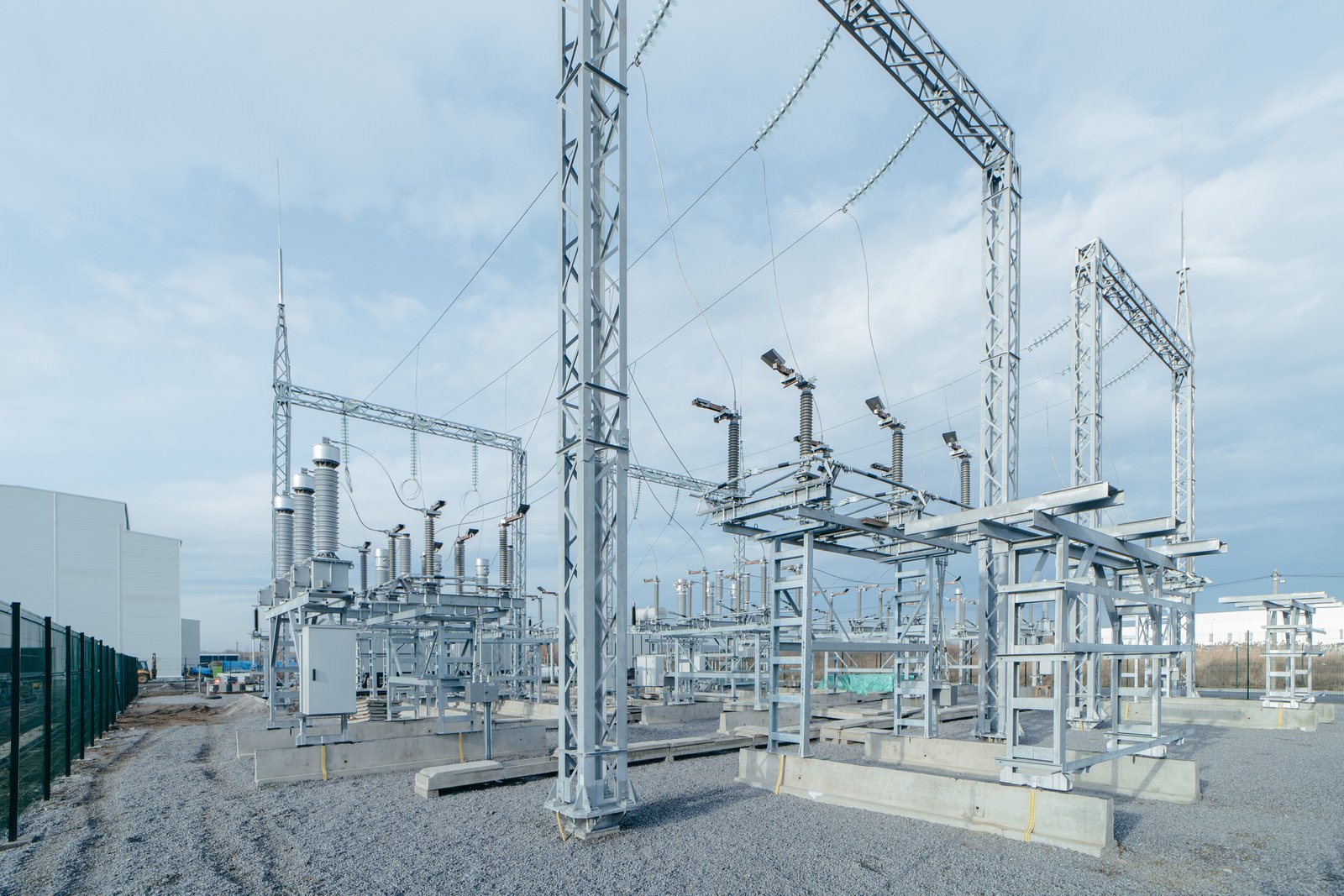
Electricity grids illustrate the problem. A new source of generation has limited strategic value if transmission capacity cannot connect it to demand. A data centre cannot operate on an assumption of future power. A factory does not locate where a grid may eventually become adequate. A city cannot electrify transport, heating and industry through generation capacity alone. The missing network becomes the constraint through which all other investments must pass.
The International Energy Agency has documented rising pressure on transmission supply chains, including longer procurement periods and higher costs for critical components. These are not temporary inconveniences at the edge of the energy transition. They alter the price and timing of the transition itself.
A government may postpone grid expansion because current demand appears manageable. But investors make decisions based on expected access, not only present consumption. When the constraint becomes visible in official forecasts, manufacturers of transformers, cables and switchgear may already be operating against extended order books. The state then pays twice. First through the investment it postponed. Then through the higher cost of recovering the time it lost.
This is Temporal Transfer: the movement of a present obligation into a future period where it often returns in a more concentrated and less manageable form. The liability has not disappeared. It has changed owners. The administration avoiding the expenditure may not be the administration forced to manage the shortage. The company protecting this year's margins may not be led by the team required to rebuild capacity later. The consumer benefiting from low visible costs today may become the taxpayer funding emergency intervention tomorrow.
Delay can therefore make a decision appear efficient by transferring its consequences beyond the institution, budget or tenure in which the decision is judged.
V. Three Industries, Three Clocks
The cost of time does not operate identically in every sector. Its strategic importance depends on the mechanism through which capability is created. Aviation, semiconductors and energy infrastructure each reveal a different clock.
Aviation: the clock of production slots. An aircraft order is not simply a purchase of equipment. It is a claim on future industrial capacity. The value of that claim depends partly on when it enters the production system.
Commercial aircraft are assembled through large networks of specialised suppliers, certified components, engines, software, maintenance arrangements and trained personnel. Production cannot be expanded instantly without affecting quality, delivery reliability and the wider supply base. When demand rises, an airline that delayed fleet renewal may still be able to order aircraft. What it may no longer be able to obtain is the delivery period around which its network strategy was designed.
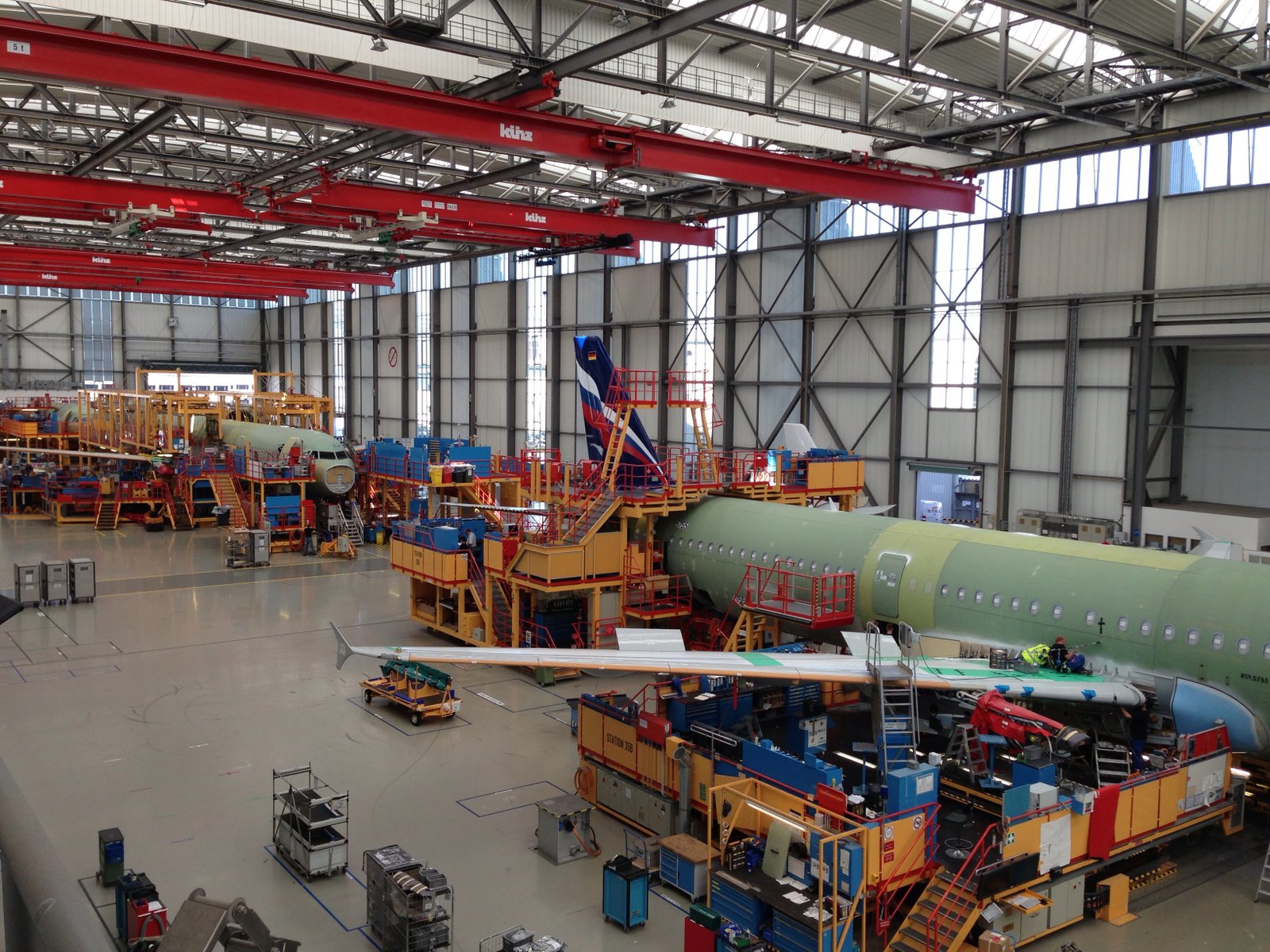
Airbus ended 2025 with a record commercial aircraft backlog of 8,754 aircraft after delivering 793 during the year. The figures illustrate the difference between an asset being commercially available and being available within a strategically useful time frame.
The cost of waiting is therefore not confined to a higher acquisition price. It may include years of additional fuel consumption from older aircraft, maintenance exposure, reduced network flexibility, delayed route development and dependence on leased capacity obtained under less favourable conditions. The order deferred in one cycle can become the operational constraint of the next.
Semiconductors: the clock of accumulated capability. A semiconductor fabrication facility presents a different problem. Capital is essential, but capital alone does not create production capability.
A fab depends on equipment, materials, process knowledge, water, energy, software, suppliers, maintenance, quality control and a labour force capable of operating at extraordinary precision. The facility can be constructed within a defined period. Its competence cannot.
Yield improves through repetition. Failures become institutional knowledge. Engineers learn how equipment behaves under real operating conditions. Suppliers adapt to the specific requirements of the facility. Teams develop routines that are difficult to document completely and impossible to acquire instantly.
This creates Capability Lag: the interval between possessing an asset and possessing the mature institutional ability to use it reliably at the required scale. The lag explains why industrial sovereignty cannot be ordered like machinery. A government may finance a facility. It cannot finance ten years of experience into immediate existence.
The 2024 analysis by the Semiconductor Industry Association and Boston Consulting Group described a geographically rebalancing supply chain supported by very large planned investments. Yet physical capacity remains only one layer of resilience. The deeper challenge is reproducing the specialised ecosystems on which advanced fabrication depends.

The delay concerns not only the asset. It concerns the knowledge that should have grown alongside it. A country beginning late may buy newer equipment than an established producer. It may even construct a more advanced facility. But the incumbent has accumulated something less visible: a memory of errors, adjustments, supplier interactions and operational refinements that cannot be compressed into the construction schedule.
Ownership controls the asset. Experience controls the output.
Energy: the clock of connected systems. Energy infrastructure operates through another form of delay. Its value depends on coordination across multiple assets that must become available in the correct sequence.
Generation requires transmission. Transmission requires substations. Electrification requires distribution. New industrial demand requires reliable connections. Storage, interconnection, permitting and market design must evolve around the physical network. A delay in one component can reduce the productivity of capital invested in another.
This is why energy transitions cannot be understood as collections of individual projects. They are timing problems across connected systems. A renewable project may be completed but unable to export power. A factory may be ready but unable to secure a connection. A region may attract investment announcements without possessing the network capacity required to convert them into operating assets.
The system is constrained not by the total amount invested but by the slowest indispensable layer. The cost of delay therefore propagates. A transformer ordered late delays a substation. The delayed substation postpones a connection. The missing connection changes an industrial decision. The lost industrial project weakens the economic case for surrounding infrastructure. Time travels through the network.
VI. Recovery Costs More Than Preparation
Institutions often assume that a postponed capability can be recovered when conditions become clearer. This assumption underestimates the price of urgency.
Preparation occurs while choices remain broad. Recovery begins after choices have narrowed. The organisation preparing early can sequence investment, develop suppliers, train personnel, test systems and absorb mistakes gradually. The organisation recovering late must do several things at once. It must acquire scarce inputs while others are seeking them. It must expand capacity while operating under pressure. It must train personnel while production targets are already exposed. It must negotiate from necessity rather than preference. It must justify costs that now appear inflated compared with the original proposal.
The same capability that once looked premature can later become urgent. Urgency does not merely accelerate expenditure. It changes bargaining power. Suppliers recognise the absence of alternatives. Governments accept weaker terms. Institutions tolerate greater concentration. Temporary solutions become embedded. Emergency procurement creates long-lived dependencies.
The late actor may eventually acquire the asset, but on conditions shaped by the time it surrendered.
This creates a paradox. The decision to wait is often defended in the language of discipline. Yet waiting can produce the least disciplined form of investment: compressed, politically exposed, operationally urgent and negotiated after leverage has shifted elsewhere. The institution avoids committing under uncertainty only to commit later under constraint.
VII. The Governance of Invisible Costs
Why do capable institutions repeatedly make this error? Because visible costs possess institutional owners. Invisible costs often do not.
A proposed project belongs to a ministry, division or executive who must defend its budget. The future consequences of delay may be distributed across consumers, suppliers, operators, regions and administrations that are not represented in the original decision. There may be no single line for lost optionality. No department records knowledge that was never accumulated. No balance sheet recognises the delivery slot that was not secured. No procurement system measures the bargaining power transferred to a future supplier. No annual report lists the industrial ecosystem that formed elsewhere.
Traditional appraisal frameworks are therefore strongest where the cost is financial and attributable. They are weaker where the cost is temporal, systemic and dispersed.
The OECD's infrastructure-governance framework emphasises decisions across the entire infrastructure life cycle, including planning, prioritisation, financing, delivery, operation and monitoring. The World Bank's infrastructure-governance work similarly treats institutional quality as a determinant of whether investment produces durable outcomes.
But lifecycle governance must also recognise what happens before an asset exists. The decisive question is not only whether a project is affordable today. It is whether the institution can still afford to create the capability later.
A more complete appraisal would ask: What conditions required for this option are deteriorating? Which suppliers, skills, licences or locations may become unavailable? How long will capability take to mature after the asset is delivered? Which dependencies deepen during the waiting period? What costs are being transferred beyond the present budget? At what point does delay cease to preserve optionality and begin to destroy it?
These questions do not eliminate uncertainty. They reveal that uncertainty exists on both sides of the decision. Action carries risk. So does the passage of time.
VIII. Time as Strategic Capital
Capital is usually understood as money, assets or productive capacity. Time should be treated as another form of strategic capital. It can be invested. It can be wasted. It can be transferred. It can be used to accumulate knowledge before competitors recognise its value. It can be exchanged for resilience by developing alternatives before they are required. It can also be surrendered to suppliers, rivals and external systems whose leverage grows during the period of institutional hesitation.
Unlike financial capital, lost time cannot be recapitalised directly. Money can accelerate construction. It cannot fully reproduce the years during which an organisation might have learned, trained, negotiated, tested and built trust.
This does not mean that every long-term project should begin immediately. Some investments should be rejected. Some technologies will fail. Some forecasts will prove exaggerated. Strategic seriousness does not require indiscriminate action. It requires comparing the full cost of acting with the full cost of waiting. That comparison must distinguish reversible delay from irreversible drift. It must identify which options remain genuinely executable. It must recognise when a capability requires years of accumulation before it becomes productive. And it must treat the future cost of recovery as part of the present decision.
The purpose is not to predict the future perfectly. It is to avoid entering the future structurally late.
Conclusion — The Decision Already Being Made
The boardroom returns to the proposal. The expenditure remains substantial. The forecast remains uncertain. The safer decision still appears to be postponement.
Yet the institution is not choosing between action and stillness. It is choosing between two uses of time. One path begins the slow accumulation of capability. The other extends the existing structure and accepts whatever dependencies, shortages and constraints that structure produces. Only one of these paths appears in the capital budget. Both will be paid for.
The true cost of a strategic decision is therefore not limited to the capital it consumes. It includes the time it requires, the options it preserves, the knowledge it permits to accumulate and the dependencies it prevents from becoming structural.
The most expensive decisions rarely look expensive when they are made. They look cautious. They look temporary. They look reversible. Their cost becomes visible only later, when the organisation discovers that money can still purchase the asset—but no longer the time that should have preceded it.
— Curated Sovereignty
Selected Sources
The following institutional sources informed the analysis and factual framework of this essay.
Airbus, Airbus reports 793 commercial aircraft deliveries in 2025, press release, 12 January 2026. Official source.
Airbus, Airbus reports Full-Year (FY) 2025 results, press release, 19 February 2026. Official source.
International Energy Agency, Building the Future Transmission Grid: Strategies to Navigate Supply Chain Challenges, February 2025. Official report.
Semiconductor Industry Association and Boston Consulting Group, Emerging Resilience in the Semiconductor Supply Chain, May 2024. Official report.
OECD, Recommendation of the Council on the Governance of Infrastructure, OECD/LEGAL/0460, adopted 17 July 2020. Official legal instrument.
OECD, Methodology for the Infrastructure Governance Indicators, Government at a Glance 2025. Official source.
World Bank, Infrastructure Governance Assessment Framework, December 2020. Official report.
Author's Note
Questions for Future Research
1. Can Temporal Mispricing be measured? — Could a standardised framework compare the visible cost of immediate action with the future cost created by delay, including cost inflation, lost access, dependency growth and capability lag?
2. When does waiting stop preserving optionality? — What indicators reveal the transition from productive caution to structural drift?
3. How should accumulated capability be valued? — Can financial and strategic models account for operating knowledge, supplier relationships, workforce experience and institutional memory that do not appear as conventional assets?
4. Who ultimately bears the cost of deferred investment? — How is Temporal Transfer distributed among future management teams, governments, consumers, taxpayers and dependent industries?
5. Should long-lead-time sectors use a different discount logic? — Do conventional discount-rate methods systematically undervalue investments whose principal benefit is preserving future access and reducing strategic dependence?
Related Concepts
Temporal Mispricing — The failure to price the structural consequences of acting later while accurately recording the visible cost of acting now.
Temporal Transfer — The displacement of a current obligation into a future period, institution or stakeholder group, where it often returns in a more concentrated form.
Capability Lag — The interval between acquiring an asset and developing the mature institutional ability to operate it reliably at scale.
Optionality Half-Life — The progressive deterioration of a strategic option as the conditions required to execute it become scarcer, more expensive or less accessible.
Nominal Optionality — The appearance that a choice remains available after its practical executability has materially weakened.
Recovery-Cost Inflation — The premium paid when an institution attempts to rebuild a capability after urgency, scarcity and dependence have replaced preparation.
Curated Sovereignty examines strategic questions whose answers are still emerging.