Culture · Institutions · Sovereignty
The Governance of Cultural Time
How Saadiyat and Alserkal Turn Duration and Circulation into Institutional Power
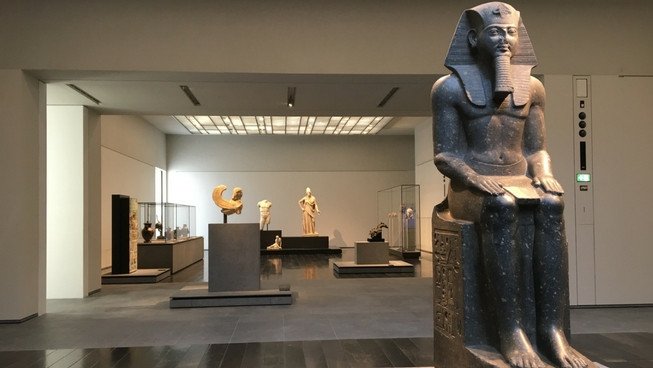
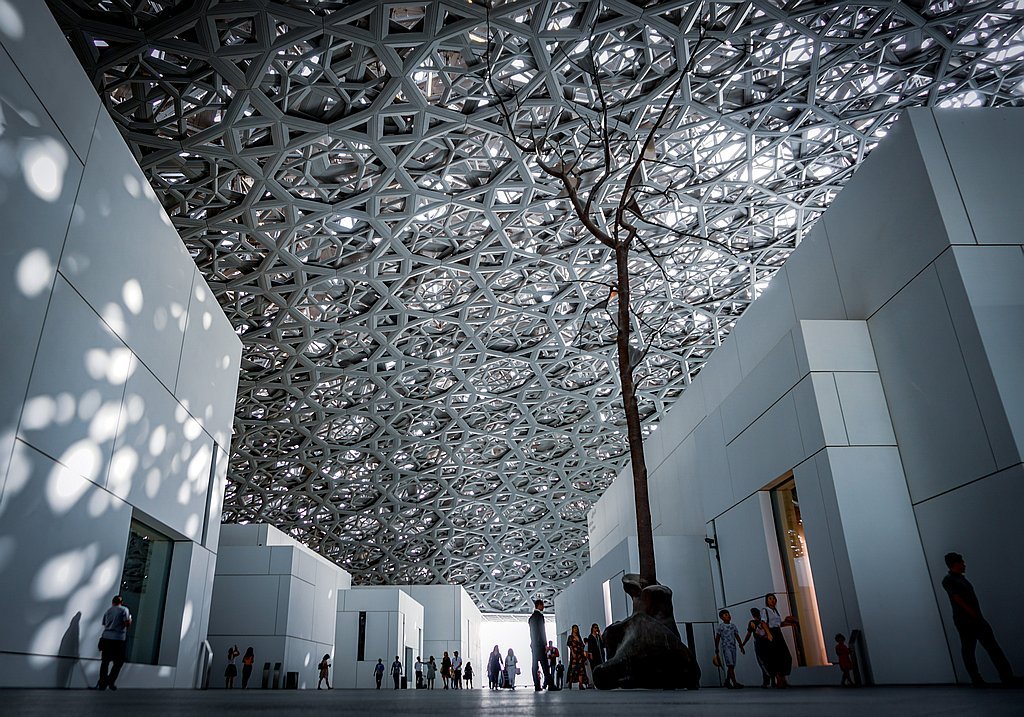
On 11 November 2017, Louvre Abu Dhabi opened to the public beneath a vast dome designed by Jean Nouvel. Inside were some six hundred works. Approximately half belonged to the museum's own collection, assembled through acquisitions begun before the museum opened. The remainder had arrived on loan from thirteen French cultural institutions.
The works shared the same galleries, the same light, the same institution. They did not share the same future. Some had been acquired to remain. Others had come through agreements that anticipated their return.
The 2007 agreement between Abu Dhabi and France had given the museum the use of the Louvre name for thirty years and six months. It had also established a ten-year framework for loans from French institutions, on a decreasing basis as the museum's permanent collection grew, and a fifteen-year programme of temporary exhibitions. Part of what the museum displayed was scheduled to leave.
Permanence and passage occupied the same room.
I. The Architecture of Duration
Duration, in a museum, is not produced by stone. It is produced by institutions.
The intergovernmental agreement of 2007 was signed before the building existed. It fixed a name licence for thirty years and six months, a ten-year framework for loans from French institutions, and a fifteen-year programme of temporary exhibitions. The legal horizon preceded the physical one.
The museum had already begun building its own collection before opening. By the time visitors entered in November 2017, approximately 300 works from its holdings were displayed alongside 300 works borrowed from French institutions. These acquired works did not have a return date. They provided an institutional core around which loans could be arranged.
Conservation facilities were built into the museum. Educational programmes were established for schools and families. Research accompanied exhibitions and publications. The institution was not designed only to display. It was designed to preserve, to transmit, and to accumulate understanding over time.
Saadiyat Cultural District, under the Department of Culture and Tourism – Abu Dhabi, extends this logic. Zayed National Museum, Guggenheim Abu Dhabi and other institutions were conceived as part of the same district. Together, they form an institutional architecture of duration: to hold, to teach and to remain.
Monumentality is the visible expression. The architecture of duration is legal, curatorial, educational and administrative.
II. Duration Without Possession
A museum can be built for continuity and still depend on movement.
The French loans that opened Louvre Abu Dhabi in 2017 were never intended to remain indefinitely. The agreement provided for French loans over ten years on a decreasing basis as the museum's permanent collection grew. Works return. Others arrive. The loan framework was not a fixed deposit. It established a rhythm of arrival, rotation and return.
The museum also presents temporary exhibitions. Each brings works into the building for a defined period, then returns them. Each requires conservation, logistics, insurance, legal arrangements and curatorial planning. The permanent galleries do not float above this movement. They coexist with it.
The collection itself continues to change as acquisitions extend beyond the museum's opening. What is called permanent is therefore neither fixed nor complete; it is a body assembled over time.
Duration, in this setting, depends on the capacity to absorb movement without surrendering continuity.
III. The Institution of Recurrence
In the same year the intergovernmental agreement was signed, a different kind of cultural district began to form.
Alserkal Avenue was established in 2007 in the Al Quoz district of Dubai. It was not created by treaty. It developed from an industrial compound that began to host galleries and cultural organisations.
Concrete, a dedicated arts space designed by OMA, opened in March 2017. It was commissioned by Alserkal Avenue as a flexible venue for exhibitions, performances and cultural programming. Months later, Louvre Abu Dhabi opened.
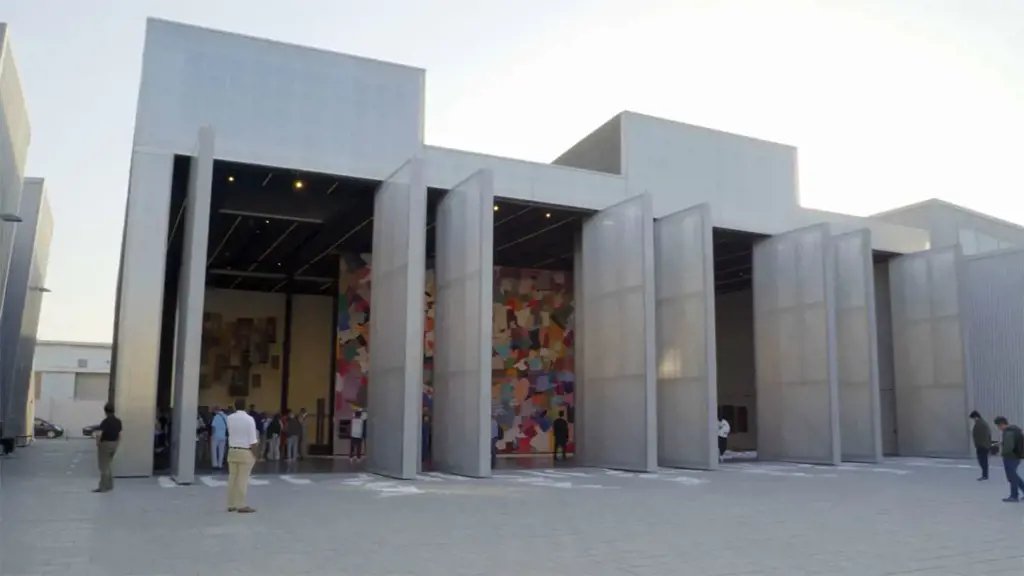
The two events were not connected. They did not need to be. The coincidence placed two different temporal logics in unusually close view.
By then, Alserkal Avenue had been developing for a decade. Galleries had stayed. Artists had returned. Organisations had persisted. In 2017, Alserkal Residency was established as a platform for artistic experimentation and research. Two years later, in March 2019, Alserkal Arts Foundation was formally announced, expanding the organisation's non-profit commitments through residencies, commissions, research grants and learning programmes.
Recurrence is not the same as a permanent collection. But over time, it creates a different kind of continuity — one built not from acquisition, but from return.
IV. When the Distinction Breaks
At first, the contrast seems clear. Saadiyat preserves. Alserkal circulates.
But the evidence does not hold.
Louvre Abu Dhabi has commissioned contemporary work. It presents temporary exhibitions and integrates works from outside its own collection into its institutional programme. Saadiyat circulates.
Alserkal has retained long-term cultural actors. Its foundation supports research and practices capable of accumulating institutional memory. Alserkal preserves.
The two are not opposite institutional species. They are different arrangements of the same materials. What differs is the emphasis: Saadiyat structures circulation around a permanent core. Alserkal allows permanence to emerge through recurrence.
V. The Governance of Cultural Time
A museum is not a building that preserves. It is an arrangement that decides what deserves to endure.
A district of galleries is not a place where things merely circulate. It is an arrangement that determines what is allowed to return.
Acquisition gives one object duration. A loan gives another a defined interval. A residency gives a practice time without requiring permanence. A commission creates an encounter whose institutional consequences may survive the work itself. These mechanisms do not abolish circulation. They assign different temporal conditions to what circulates. Through them, institutions determine what remains, what returns, what accumulates and what is allowed to disappear.
Cultural time is governed.
It is governed not by stopping movement, but by determining what movement is allowed to become durable.
VI. From Institutions to Systems
Neither Saadiyat nor Alserkal operates alone.
Louvre Abu Dhabi depends on an intergovernmental agreement, on Agence France-Muséums, on French cultural institutions, conservation teams, educators, logistics and a legal framework that extends beyond the museum itself. The partnership itself distributes expertise, training, loans and exhibition-making across institutions in two countries.
Alserkal depends on galleries, artists, the Arts Foundation, residencies, commissions, professional networks and the wider cultural ecosystem that surrounds it.
Continuity, expertise, finance, law, logistics, conservation, education and reputation extend beyond the visible institution. The museum and the district are where these distributed capacities become perceptible, but neither produces continuity alone.
What appears as institutional permanence is sustained by relationships that exceed the institution itself.
VII. The Power to Leave Something Unfinished
A mature cultural infrastructure must be able to hold what is not yet finished.
Temporary exhibitions create encounters whose consequences may outlast the works themselves. Residencies allow research to develop before its destination is known.
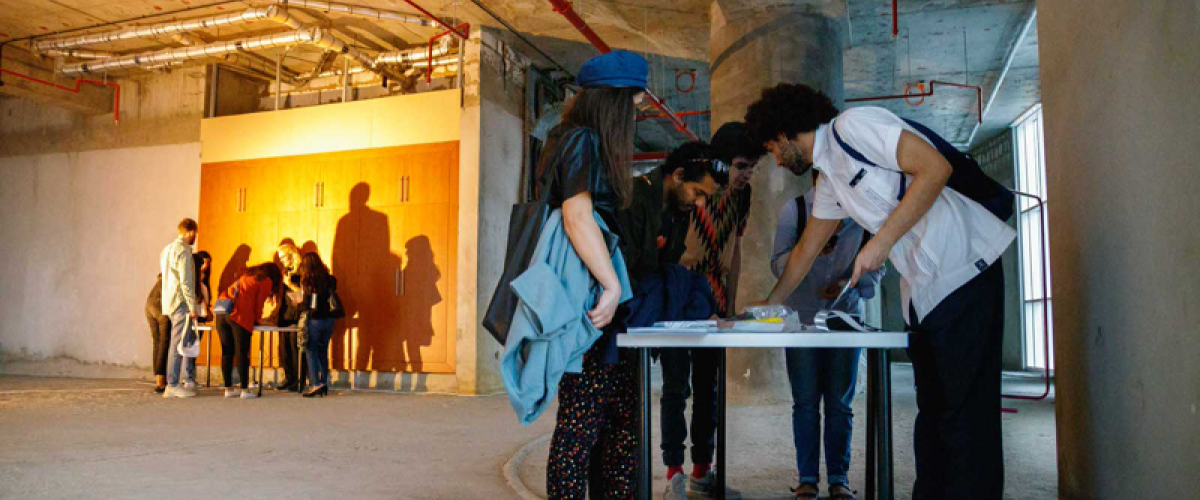
Alserkal's residency programme, for example, is explicitly research-led and structured around artistic and scholarly inquiry rather than visual production alone.
Commissions create space for work whose eventual place within the cultural landscape has not yet been determined.
Institutions do not only preserve what has already acquired value. They can also create the conditions in which value has time to emerge.
Some things will be retained. Others will return, disperse or disappear. The strength of the system lies partly in its ability to accommodate that uncertainty without resolving it too early.
Preservation without renewal eventually becomes inheritance alone. Circulation without retention struggles to accumulate institutional memory.
The capacity to leave something unfinished keeps both possibilities open.
Conclusion — The Same Room
On 11 November 2017, six hundred works were presented in the inaugural galleries of Louvre Abu Dhabi. Three hundred came from the museum's own holdings. Three hundred had come on loan from French institutions. They shared the same galleries. They did not share the same future.
Their different futures were not a contradiction in the institution. They were part of its architecture.
Cultural authority does not reside in permanence alone, nor in circulation alone. It resides in the institutional capacity to govern the passage between them.
The museum had not resolved the tension between duration and passage. It had given that tension an institutional form.
The visitor who saw the works in 2017 was not seeing a collection. What appeared was an arrangement of futures.
— Curated Sovereignty
Editorial Statement
Author's Note
Selected Sources
Louvre Abu Dhabi / France–UAE institutional framework
Intergovernmental Agreement concerning Louvre Abu Dhabi, 2007
Louvre Abu Dhabi
Our Partners — Official institutional documentation
Musée du Louvre
Louvre Abu Dhabi, a new cultural landmark for the 21st century, opens to the public on 11 November 2017 — Official opening documentation
Musée du Louvre
The Louvre Abu Dhabi — Official institutional overview
Ateliers Jean Nouvel
Louvre Abu Dhabi — Project documentation
Alserkal Avenue
Institutional history and programme documentation
Alserkal Arts Foundation
Residency and Research — Official Foundation documentation
Alserkal Arts Foundation
Formal announcement of the Foundation, 18 March 2019 — Official institutional announcement
OMA
Concrete at Alserkal Avenue — Project documentation, 2017
Department of Culture and Tourism – Abu Dhabi
Saadiyat Cultural District institutional documentation
Dubai Culture & Arts Authority
Al Quoz Creative Zone institutional documentation
Curated Sovereignty examines strategic questions whose answers are still emerging.