Energy · Infrastructure · Aviation
The Invisible Fuel
Aircraft Extend Reach. Fuel Defines the System.
Somewhere tonight, the director of a refinery will approve a production schedule that appears to concern only fuel. The decision will not be announced by an airline, displayed on an airport departure board, or noticed by the passengers who will travel in the weeks ahead. Yet its consequences will move quietly through storage terminals, maritime routes, pipelines, trading systems, and airport infrastructure until, far from the refinery where the decision was taken, they become part of a departure.
By the time an aircraft pushes back from its gate, the energy required for its journey has already travelled through a system far larger than the airport itself. Crude oil has been refined to exact technical standards. Fuel has crossed ports or entered regional distribution networks. Storage volumes have been calculated, quality certified, reserves protected, and deliveries coordinated with schedules that leave little room for interruption. The aircraft becomes visible only at the end of this sequence.
This is one of aviation's most persistent illusions. Because the aircraft is the object that rises, it appears to be the protagonist of flight. Airlines are consequently understood through their fleets, airports through their runways and terminals, and aviation powers through the reach of their networks. The deeper system remains largely absent from public view. Flight depends on wings only after it has already depended on energy.
Modern commercial aviation continues to rely overwhelmingly on kerosene-based jet fuel, principally Jet A and Jet A-1, delivered through one of the most mature downstream systems in the global economy. That system was built over decades to perform a demanding but seemingly simple function: ensure that enormous quantities of fuel reach aircraft in a form that is standardized, safe, and continuously available. Its success has made it almost imperceptible. Fuel arrives with such regularity that its arrival is treated less as an industrial achievement than as a natural condition of flight.
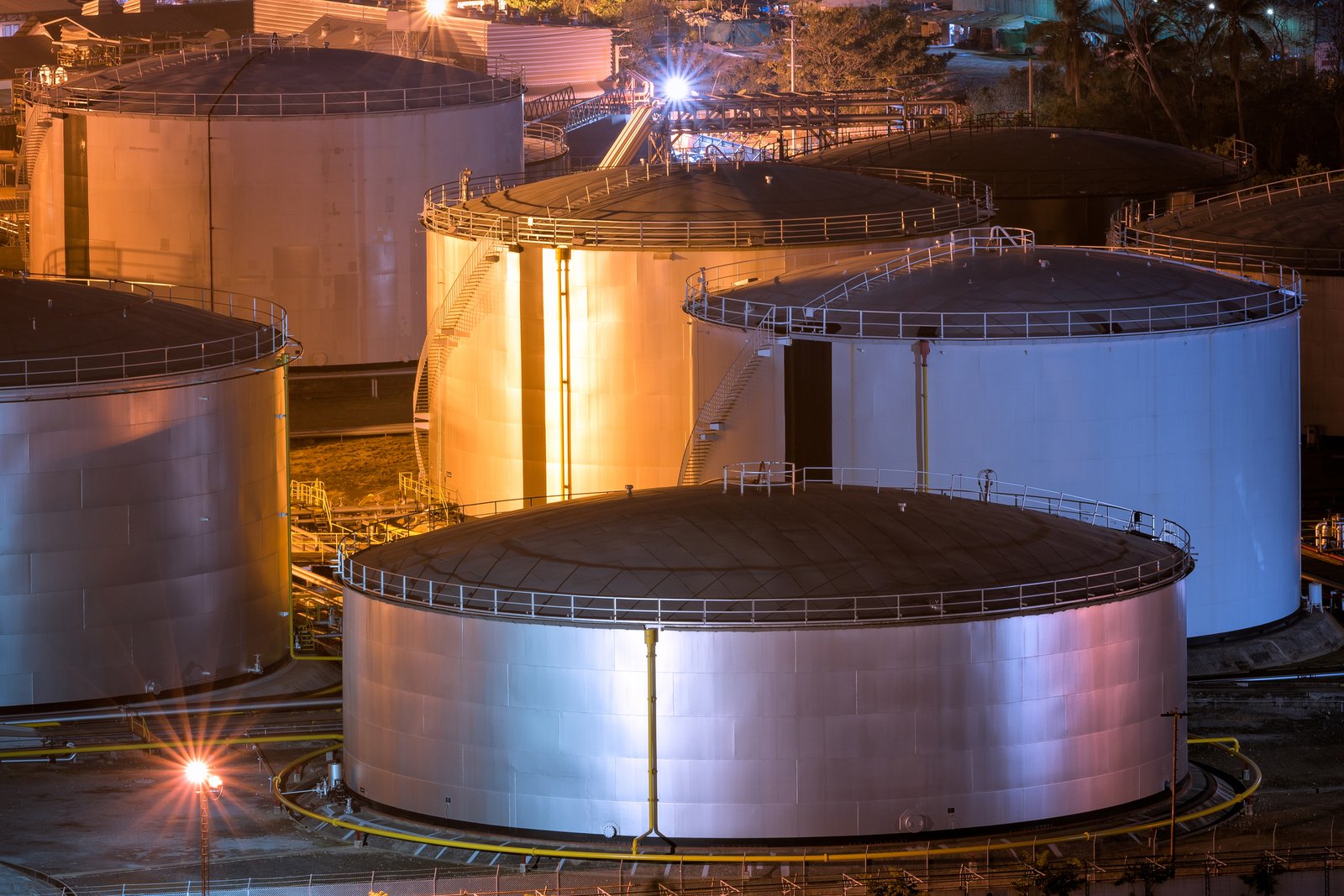
The scale involved is considerable. Global airlines consumed approximately 103 billion gallons of fuel in 2025. In mid-2026, IATA estimated that consumption would remain near 104 billion gallons for the year, even as fuel prices again became a major source of pressure on airline profitability. Aviation therefore requires more than one hundred billion gallons annually merely to preserve the movement already embedded in the global economy.
This infrastructure was designed for volume, reliability, and standardization rather than rapid transformation. Its purpose was not to adapt elegantly to a different energy future. Its purpose was to keep aircraft moving through the present one.
That distinction is becoming increasingly important. Aviation demand continues to expand through new routes, larger fleets, airport enlargement, and the ambitions of cities seeking to become international connectors. Yet the limits of that expansion may no longer be determined only by aircraft production, airport slots, financing, or pilot availability. They may increasingly be shaped by the capacity of energy systems to supply, store, certify, price, and deliver fuel at the scale that aviation growth requires.
An aircraft order is often interpreted as future capacity. In reality, it is only one component of that capacity. The aircraft must be supported by airport infrastructure, maintenance, crews, air rights, and demand, but also by an energy architecture capable of sustaining every departure throughout the life of the asset. Where refining capacity is constrained, logistics fragile, storage insufficient, or supply concentrated, the distance between acquiring an aircraft and operating it reliably begins to widen.
The climate transition introduces a second and more demanding tension. Aviation is expected to expand while reducing the emissions associated with that expansion. It must preserve global connectivity while reconstructing the energy system on which connectivity depends.
Sustainable aviation fuel has emerged as the sector's most immediate transition pathway because certified blends can be introduced into much of the existing aircraft and airport system without requiring the immediate replacement of global fleets. This compatibility is strategically important. It allows emissions reductions to begin within the present architecture rather than waiting for an entirely new generation of aircraft.
Compatibility, however, should not be confused with abundance.
Global SAF production reached approximately 1.9 million tonnes in 2025, representing only about 0.6 per cent of total jet-fuel consumption. For 2026, IATA expected production to rise to roughly 2.4 million tonnes, still only around 0.8 per cent of aviation fuel use. The industry is therefore attempting to build a new energy pathway while its output remains below one per cent of the system it is expected eventually to transform.
SAF depends on feedstocks, conversion technologies, refinery investment, certification, long-term purchasing agreements, public incentives, and distribution arrangements. Its scale is constrained not by a single missing component, but by the incomplete formation of an industrial ecosystem.
Some feedstocks are limited. Some production pathways remain expensive. Refiners require confidence that demand will persist long enough to justify investment, while airlines require confidence that supply will become sufficient and affordable. Governments can mandate consumption, but they cannot create refineries, feedstocks, logistics, and technical expertise by regulation alone.
Policy is nevertheless beginning to translate environmental ambition into operational obligation. CORSIA allows aircraft operators to reduce certain offsetting requirements through eligible sustainable or lower-carbon aviation fuels that meet ICAO sustainability and lifecycle-emissions criteria. Those criteria require, among other conditions, a reduction of at least 10 per cent against the conventional aviation-fuel lifecycle baseline.
The European Union has adopted a more direct approach through ReFuelEU Aviation. Fuel suppliers at covered Union airports were required to provide a minimum SAF share of 2 per cent from 2025, rising to 6 per cent in 2030 and progressively to 70 per cent by 2050. Regulation is therefore beginning to create demand at a pace that industrial capacity may struggle to match.
This produces an unusual transition problem. The established fuel system cannot be withdrawn while its successor is still being assembled, because every day of energy transition must also remain a day of uninterrupted flight. Aviation will therefore operate for years inside two overlapping systems: one mature, globally distributed, and indispensable; the other emerging, costly, politically supported, and still too small to carry the network alone.
The result will not be a simple substitution in which one fuel gradually replaces another without altering the surrounding architecture. New supply chains will coexist with old ones. Airports will need to manage different sourcing arrangements and, depending on future fuel pathways, different storage and handling requirements. Airlines will face unequal access and prices across regions. States with the resources to support production may accelerate, while others remain dependent on imported fuel or on environmental credits purchased elsewhere.
The energy transition may consequently reshape the geography of aviation before it fully changes the technology of aircraft.
Hydrogen presents an even more radical possibility. Its attraction lies partly in its high energy content by mass and in the prospect of propulsion without carbon dioxide emissions at the point of use, particularly when used through fuel-cell systems. Yet aviation is not governed by mass alone. It is governed by volume, weight distribution, temperature, safety, aircraft geometry, turnaround time, and the economics of carrying energy across distance.
To be used as a liquid aviation fuel, hydrogen must be maintained near minus 253 degrees Celsius. This requirement transforms storage from a routine airport function into a cryogenic industrial operation. Tanks must be insulated, handling systems redesigned, leaks managed differently, and refuelling procedures integrated into airports whose layouts were never conceived around liquid hydrogen. Airbus-led work on airport demonstrations has examined not merely the aircraft, but delivery, staging, refuelling zones, venting, risk controls, permits, and the effect of new ground operations on existing airport activity.
The aircraft itself would also have to change. Liquid hydrogen requires substantially greater tank volume than conventional jet fuel, placing pressure on fuselage configuration, passenger capacity, range, and centre-of-gravity management. Engines or fuel-cell systems would need to be developed around a different energy architecture. Maintenance regimes, emergency procedures, and airport interfaces would all have to evolve with them.
The transition will therefore be slow not because ambition is absent, but because physics becomes infrastructure. Temperature, volume, containment, safety, aircraft design, and airport operations become inseparable parts of the fuel problem. A new fuel does not enter an empty system. It must negotiate with an aviation architecture built around the density, stability, and logistical convenience of kerosene.
Fuel is consequently one of the least visible forms of strategic power in aviation. Aircraft may determine how far an airline can fly, but fuel determines whether that reach can be sustained, replicated, and expanded. A fleet represents potential movement. Energy converts that potential into a functioning network.
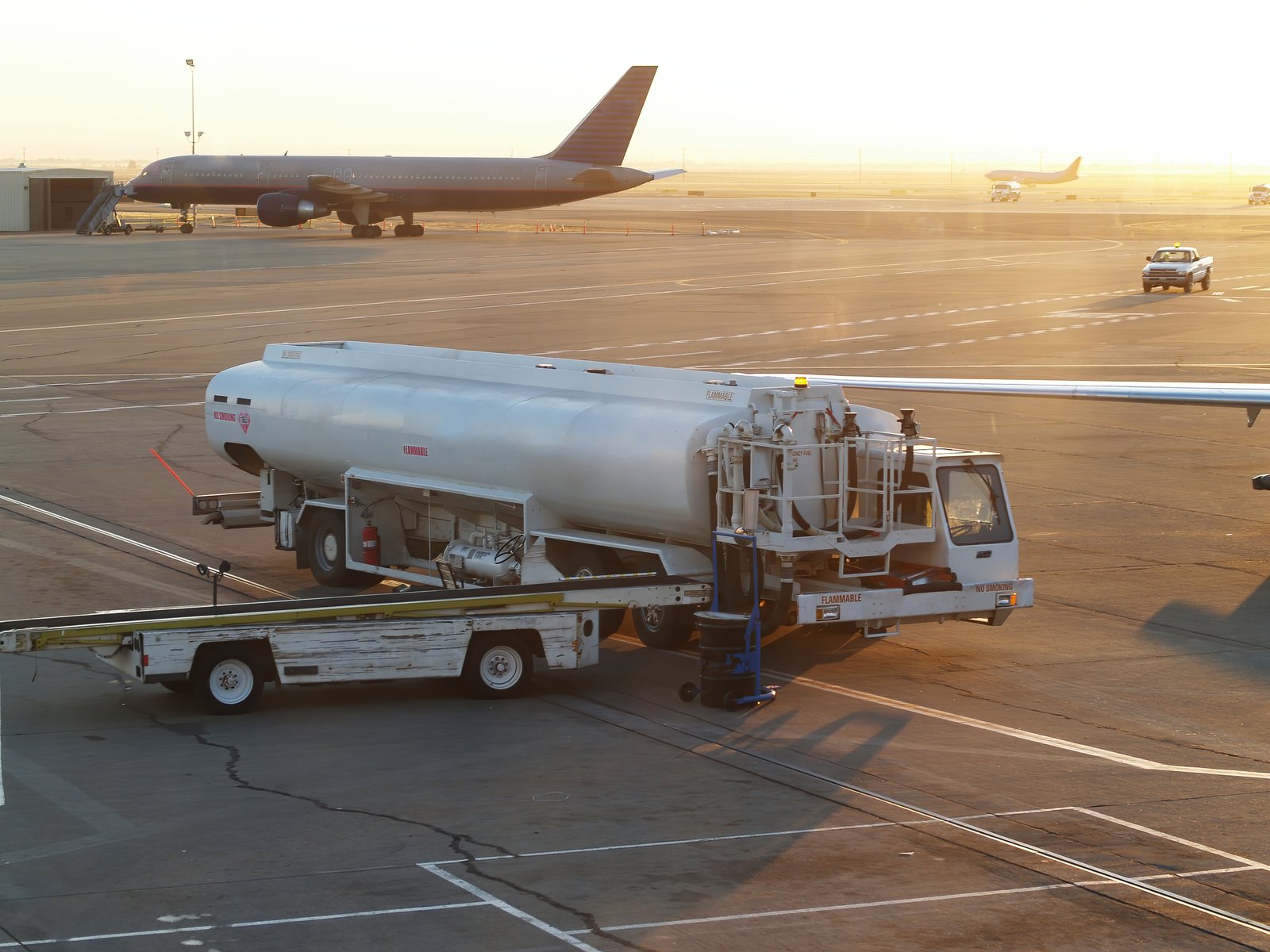
This power does not derive from production alone. It emerges from the ability to combine refining access, maritime connectivity, storage depth, pipeline capacity, trading liquidity, certification, and dependable delivery. Certain locations therefore matter far beyond the amount of crude oil produced within their borders. Singapore, Rotterdam, Houston, and Fujairah have acquired strategic significance because they operate as conversion points where global energy markets become usable transport capacity.
Their strength lies in orchestration. Fuel must arrive through ports or pipelines, be stored in sufficient volumes, traded at competitive prices, protected against disruption, certified to the required standard, and distributed to airports on schedules aligned with airline operations. Geography creates the possibility of becoming an energy node. Infrastructure and institutions turn that possibility into leverage.
This concentration creates a geography of dependence beneath the geography of routes. Airlines may compete through service, network design, aircraft type, and brand, yet they ultimately draw energy from infrastructures they rarely control. A carrier can own aircraft and retain landing rights while remaining exposed to refinery outages, maritime disruption, storage constraints, contractual dependence, or regional price shocks.
The airport may appear to be the centre of aviation, but the airport is itself the endpoint of a much larger industrial chain. Its operational sovereignty depends partly on systems that may begin hundreds or thousands of kilometres away. The continuity of flight is therefore connected to events that occur far beyond the runway: a refinery maintenance schedule, a restricted maritime passage, a pipeline interruption, a storage shortage, or a change in the rules governing eligible fuels.
Dubai's aviation rise illustrates what becomes possible when those dependencies are understood as a single architecture rather than as separate sectors. The city did not build global aviation capacity through aircraft orders and airport expansion alone. Port access, storage, fuel distribution, logistics, and aviation infrastructure developed in ways that reinforced one another.
ENOC's Project Falcon connected fuel infrastructure at Jebel Ali with Dubai International Airport, embedding the airport more deeply within the emirate's port and energy-logistics system. ENOC subsequently announced plans to extend a further 16-kilometre jet-fuel pipeline toward Al Maktoum International Airport in anticipation of future traffic growth. The significance lies not merely in the length of the pipeline, but in the sequence of development: aviation expansion was accompanied by an effort to secure the energy flows on which expansion would depend.
Dubai's airport system is therefore not simply supported by fuel. It is connected to a wider architecture in which maritime access, storage, distribution, and aviation capacity become parts of the same continuity mechanism. The terminal and the aircraft provide the visible expression of ambition. The fuel system supplies the less visible capacity to make that ambition repeatable.
This is the deeper constraint behind aviation expansion. The most advanced fleet remains useful only while an energy system can sustain it. The most ambitious route map remains theoretical until fuel can be secured, priced, certified, stored, and delivered with confidence. Airport capacity is not created solely by adding runways or gates. It also depends on the industrial systems capable of supporting every movement those additions are intended to generate.
The energy transition will make this relationship more visible. As aviation moves from one dominant fuel toward a more fragmented landscape of conventional kerosene, SAF, synthetic fuels, hydrogen, and possibly other forms of propulsion, the strength of an aviation system will increasingly depend on its ability to coordinate multiple energy architectures without compromising continuity.
Some hubs will possess the capital, institutions, logistics, and policy stability required to make that transition. Others may acquire aircraft but remain constrained by energy. Some regions may become producers of new fuels. Others may become indispensable intermediaries through storage, certification, distribution, or trading. The map of aviation power may be redrawn not only by where aircraft can fly, but by where the energy for flight can be produced and made operationally dependable.

Aircraft extend geographical reach, but fuel determines whether that reach can become a system. The architecture of aviation power therefore begins long before the gate, inside the refineries, ports, storage terminals, pipelines, markets, and institutions capable of transforming energy into continuous movement.
The structures that govern that energy are never strategically neutral.
— The Dubai Curator
Selected Sources
International Air Transport Association
"Airline Profitability Stabilizes with 3.9% Net Margin Expected in 2026." December 2025. Provides the 2025 estimate of 103 billion gallons of global airline fuel consumption and the preliminary 2026 outlook.
International Air Transport Association
"Middle East Disruptions and High Fuel Prices Halve Airline Industry Profitability." June 2026. Updates the 2026 fuel-consumption estimate to approximately 104 billion gallons and examines the renewed weight of fuel within airline operating costs.
International Air Transport Association
"SAF Production Growth Rate Is Slowing Down." December 2025. Estimates global SAF output at 1.9 million tonnes in 2025, equivalent to approximately 0.6 per cent of total jet-fuel consumption, and projects 2.4 million tonnes in 2026.
International Civil Aviation Organization
"CORSIA Sustainability Criteria for CORSIA Eligible Fuels." June 2025. Defines the sustainability framework applicable to eligible fuels, including the requirement for a minimum 10 per cent lifecycle greenhouse-gas reduction against the conventional aviation-fuel baseline.
International Civil Aviation Organization
"CORSIA Eligible Fuels." Explains the certification and sustainability framework through which eligible fuels may be recognised under CORSIA and used to reduce an operator's offsetting requirements.
European Commission, Directorate-General for Mobility and Transport
"ReFuelEU Aviation." Sets out the European Union's mandatory SAF trajectory, beginning at 2 per cent in 2025 and rising progressively to 70 per cent by 2050.
Airbus
Research and technical material on liquid-hydrogen aircraft and airport operations, 2024–2026. Examines the storage, delivery, safety, refuelling, and infrastructure requirements associated with the potential introduction of cryogenic hydrogen into aviation.
ENOC Group
"ENOC Group Expands Its Aviation Global Footprint." Describes the expansion of aviation-fuel infrastructure in Dubai, including planned pipeline development toward Al Maktoum International Airport.
Author's Note
Questions for Future Research
1. How should aviation systems measure fuel continuity rather than fuel availability alone? — Conventional assessments often examine annual supply, storage volumes, or price exposure. A more complete measure would need to include refining concentration, transport routes, inventory depth, pipeline redundancy, contractual dependence, certification capacity, and the time required to activate alternative supply.
2. Could fuel infrastructure become the principal constraint on the expansion of major aviation hubs? — Airport master plans commonly model passenger demand, runway capacity, terminal throughput, airspace, and ground access. Less attention is given to whether fuel systems can expand at the same speed, particularly when conventional jet fuel, SAF, and future energy pathways must coexist.
3. Will the energy transition reduce aviation dependence or redistribute it? — SAF, synthetic fuels, and hydrogen may reduce reliance on conventional petroleum, but they could create new dependencies on feedstocks, renewable electricity, carbon sources, electrolysers, refining technologies, certification systems, intellectual property, and a smaller number of advanced producers.
4. How will unequal access to lower-carbon fuels affect competition between airlines and hubs? — Airlines based in regions with abundant production, supportive regulation, deep capital markets, or integrated logistics may secure lower prices and more dependable supply. Others may face higher compliance costs, limited availability, or dependence on imported fuels and environmental attributes.
5. Could fuel resilience become a component of aviation sovereignty? — States often understand aviation sovereignty through ownership, traffic rights, airspace control, national carriers, and airport infrastructure. Future assessments may also need to consider whether a state can maintain fuel access during geopolitical disruption, maritime interruption, refinery failure, or rapid regulatory change.
6. Which locations will become the decisive energy nodes of post-kerosene aviation? — The future map may not reproduce the present geography of oil refining. Regions with renewable-energy abundance, advanced refining capacity, major ports, large carbon sources, or strong certification and trading institutions may acquire influence over aviation without becoming traditional aviation hubs themselves.
Related Concepts
Energy Continuity — The ability of an aviation system to preserve dependable access to usable fuel across disruption, price volatility, infrastructure failure, regulatory change, and technological transition.
Fuel Sovereignty — The degree to which a state, hub, or aviation system can secure, diversify, store, distribute, and govern the energy required to maintain flight.
Operational Energy Geography — The geography formed not simply by where energy is produced, but by where it can be converted into dependable operational capacity.
Transition Overlap — The period during which an established energy system must remain fully functional while a new system is constructed alongside it.
Infrastructure-Compatible Transition — A transition pathway capable of using a substantial part of the existing aircraft, airport, storage, and distribution architecture.
Energy Orchestration Power — The capacity to coordinate production, maritime access, storage, trading, certification, distribution, and airport delivery as a single functioning system.
Curated Sovereignty examines strategic questions whose answers are still emerging.