Sovereignty · Aviation · Systems
The Sky Beyond Continents
How Small States Turn Movement Into Power
Somewhere tonight, a traveller will board a flight from Lagos to Guangzhou. They will change aircraft once. Their luggage will follow, and within two hours they will be moving again towards another continent.
They may never ask why the journey passes through Doha or Dubai rather than through one of the vast countries surrounding them. The itinerary will feel self-evident: one departure, one connection, one continuous passage across the world.
Nothing about it is self-evident.
The route exists because governments negotiated access, airlines assembled traffic from distant markets, airports were designed around transfer, and public institutions learned to coordinate movement at a scale far greater than the territories they serve.
Doha and Dubai became important by placing themselves between journeys generated elsewhere.
A traveller moving from West Africa to East Asia, Europe to Australasia, or South Asia to North America may remain inside one of these states for only a few hours. During that interval, the journey depends on a national system: the airline, the airport, air-traffic control, border authorities, security services, maintenance teams, baggage networks and the diplomatic agreements that make the route legally possible.
The passenger experiences convenience. Behind it stands decades of statecraft.
Certain small states have used aviation to enlarge their reach beyond territorial scale. Their influence differs from military dominance, control of a maritime chokepoint or ownership of a technological monopoly. Airlines can change routes. Passengers can travel through rival airports. Traffic eventually finds alternatives.
Substitution, however, is rarely immediate or costless. Schedules must be rebuilt. Slots must be found. Crews and aircraft must be repositioned. Bilateral rights may have to be reconsidered. Connections become longer, less frequent or commercially unviable.
A hub begins to matter strategically when institutions elsewhere organise decisions around its continued availability.
That position must be built. It must also be renewed.

I. The Power of Being Between
For much of history, power was read from the map. Territory offered strategic depth. Population supplied labour and military capacity. Resources financed industry and war. Great powers were usually continental in scale, and their influence radiated from what they possessed.
That logic remains intact. Modern systems have added another route to influence: a state can enlarge the geography within which its institutions matter by organising movement across space.
Ports and trading cities understood this long before aviation. Venice drew influence from maritime exchange. Singapore prospered by connecting markets far beyond its domestic economy. Financial centres acquired reach by clearing transactions, settling disputes and providing legal confidence across jurisdictions they did not govern.
Air transport applies the same principle at exceptional speed. A state with a limited domestic market can place itself inside journeys linking populations, companies and economies several thousand kilometres away.
Location offers an opening. It does not create a hub.
Many cities stand between continents. Few become durable components of global schedules. The difference lies in the legal, commercial and institutional architecture built around geography.
An international route begins as a political arrangement. Commercial aircraft do not cross borders by simple right. They depend on sovereign airspace, overflight permissions, safety recognition, airport access and bilateral air-service agreements.
The Gulf hubs rely heavily on sixth-freedom traffic: an airline carries passengers between two foreign countries through its own state. A traveller moving from Nigeria to China through Qatar is neither originating in nor travelling principally to the airline's home market. Qatar nevertheless becomes the point through which two external markets are joined.
Such traffic rests on permissions granted by other governments. States can limit frequencies, restrict destinations, deny additional capacity or renegotiate agreements. Large aviation markets have often viewed the expansion of Gulf carriers with suspicion, particularly where national airlines feared losing long-haul traffic.
The apparent openness of the sky rests on continual negotiation.
Small states that succeed in aviation therefore require far more than airports and aircraft. They need regulatory credibility, diplomatic reach, air-navigation capability and the institutional consistency required to sustain confidence across dozens of jurisdictions.
Dubai's rise illustrates the distribution of responsibilities involved. Dubai is an emirate within the United Arab Emirates. Federal institutions negotiate air-service agreements and exercise authority over national airspace. Dubai's airport strategy, urban development and airline model operate inside that sovereign framework. Its success reflects the alignment of local ambition with federal diplomatic and regulatory power.
The distinction identifies where the instruments of the model reside.
The same architecture that gives a hub global reach also exposes it to external decisions. Its airline may connect continents while relying on access controlled by neighbouring states. Its schedules may span the world while remaining vulnerable to political agreements that can deteriorate rapidly.
Qatar experienced this contradiction during the blockade imposed by Saudi Arabia, the United Arab Emirates, Bahrain and Egypt in 2017. Qatari-registered aircraft lost access to surrounding airspace. Qatar Airways had to operate longer routes, increasing flight times and fuel consumption while reducing the efficiency of part of its network.
The closure showed how quickly territorial authority could constrain a system built on international movement. Doha's connectivity depended on geography it did not command.
Qatar nevertheless kept the hub operating. The airline rerouted aircraft, adjusted schedules and preserved much of its international network. Hamad International Airport remained the country's principal connection to the outside world.
The episode revealed the strength and the limit of aviation-derived influence. Doha could not compel neighbouring states to reopen their airspace. At the same time, the blockade could not erase years of accumulated network density, fleet capacity and commercial relationships. Those assets gave Qatar room to adapt.
Aviation hubs do not remove small-state vulnerability. They create instruments through which it can be managed.
Their strategic value grows through repeated use. Airlines organise schedules around connection windows. Companies establish offices within reach of particular routes. Tourism strategies rely on access. Governments incorporate connectivity into trade and diplomatic relationships. Each decision strengthens the node without making it permanent.
Replacing the node may be possible. Reorganising everything built around it takes time.
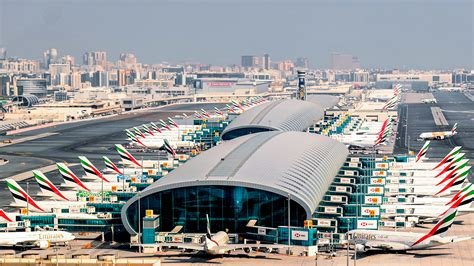
II. Three Ways to Organise Movement
An airport becomes a hub when separate journeys can be combined into a functioning network.
The process begins with scheduling. Long-haul airlines concentrate arrivals into defined periods, transfer passengers and baggage, then release another wave of departures. A traveller arriving from Nairobi may connect to Bangkok while passengers from Manchester, Mumbai and Jakarta move through the same operating window towards entirely different destinations.
Traffic too thin to sustain direct routes can support them when aggregated through a common node.
The airport must absorb this density without losing control of it. Aircraft need stands. Bags must reach the correct departures. Crews must remain within legal limits. Maintenance, catering, security, immigration and air-traffic management have to move in step. A delayed arrival may disrupt several onward flights.
Most of the work remains invisible to passengers: dispatchers protecting connections, controllers managing congestion, operations teams reallocating gates and public authorities adjusting resources as traffic changes.
Scale alone does not produce this capability. A terminal can be large and poorly connected. An airline can own many aircraft without creating an effective transfer network. The hub emerges from the quality of coordination between the airline, the airport and the state.
Dubai, Doha and Singapore developed distinct versions of this model.
Dubai: Passage as Urban Growth
Dubai's location placed it within flying range of Europe, Asia and Africa. Geography created the possibility. Integration turned it into a strategy.
Emirates was built around international transfer traffic. Airport capacity expanded alongside the airline. The resulting flows were connected to tourism, logistics, retail, real estate, hospitality and business services. Aviation became part of the city's development model rather than a transport sector operating at its edge.
This changed the value of the passenger.
A traveller passing through Dubai could remain a transfer passenger. The city also sought to convert that traveller into a visitor, customer, investor, resident or business contact. Stopover programmes, hotel capacity, retail infrastructure and relatively simple access helped turn movement through the airport into activity beyond it.
The airline expanded the city's reach. The city increased the appeal of the airline. Airport capacity reinforced both.
Dubai International became an entrance to a wider commercial platform built around access.
The value of connectivity spread across several sectors. A new route could support tourism, cargo, property demand, conferences, corporate relocation and trade. Aviation's economic effect extended far beyond ticket sales and airport revenue.
That breadth also increased exposure. A major interruption in travel affects airlines, hotels, retail, logistics and property at the same time. The pandemic made this dependence unmistakable.
Dubai's response followed the logic of the system it had built: restore movement quickly, maintain confidence and preserve the city's reputation as an accessible place to visit, invest and conduct business.
Its influence comes from the conversion of passage into presence. Traffic generated elsewhere becomes part of the city's economic life, even when Dubai was not the original reason for the journey.
Doha: Connectivity as Strategic Reach
Doha built a more concentrated system.
Qatar has a small population, a narrow domestic market and a geographic position exposed to regional politics. Qatar Airways and Hamad International Airport gave the country a global network far larger than local demand could have sustained.
The airline connected Doha directly to major commercial and political centres. It also carried the country's name and institutions before audiences that might otherwise have had little reason to encounter them.
For Qatar, aviation served several purposes at once. It reduced physical isolation, supported tourism and major events, expanded diplomatic access and strengthened international recognition.
The model was highly centralised. The airline, airport, investment institutions and diplomatic apparatus operated within a coherent national strategy. Decisions could be aligned quickly, and significant capital could be deployed behind selected priorities.
That concentration produced speed and exposure.
A disruption to the airline-airport system carried consequences far beyond transport. It affected the country's external access, commercial visibility and ability to move people during a regional crisis. During the blockade, the hub became part of Qatar's response to political pressure. It also revealed how dependent that hub remained on conditions beyond the country's control.
Doha's importance lies in the number of national functions concentrated inside the aviation system.
Connectivity gave Qatar reach. It reduced the practical effects of small-state geography without removing them.
Singapore: Reliability as a National Asset
Singapore developed its aviation hub within a broader architecture of trade, logistics, finance and regulation.
Its location near major Asian sea and air routes provided an advantage. Its institutions converted that advantage into confidence.
Changi Airport operates inside a state known for predictable administration, commercial law, security, customs efficiency and long-term infrastructure planning. Airlines and companies assess the airport together with the environment surrounding it.
Singapore's value lies in the low level of institutional friction around movement.
Goods can pass through its logistics system. Contracts can be enforced. Capital can be managed. Disputes can be settled. Travellers and businesses expect procedures to function consistently. Aviation forms part of this wider promise.
The model depends on repeated performance. Flights operate, connections are protected, regulations remain legible and institutions respond coherently when problems arise.
Reliability lowers the cost of planning. Companies can organise regional operations around Singapore because access, law, finance and transport reinforce one another. The country becomes useful across several systems at once.
This produces influence of a quieter kind. Singapore does not need to dominate every flow. It must remain one of the places through which complex activity can be organised with confidence.
Its position is continually contested. Kuala Lumpur, Bangkok, Jakarta, Hong Kong and expanding Chinese and Gulf hubs compete for traffic and investment. Longer-range aircraft reduce the need for some intermediate stops. Regional centres of economic activity shift.
Singapore therefore cannot live indefinitely on accumulated reputation. Its advantage survives through maintenance: airport investment, airline strategy, regulatory quality and the continual reduction of uncertainty.
Different Models, Shared Discipline
Dubai uses aviation to support an urban economy. Doha uses it to overcome isolation and extend national reach. Singapore places the airport inside a wider system of institutional reliability.
None of these models can be reproduced by constructing terminals alone.
Aircraft can be purchased. Runways can be laid. New routes can be announced. Bilateral access, operational discipline, commercial density, regulatory trust and confidence in continuity develop far more slowly.
These assets reinforce one another. Frequency attracts passengers. Passenger volumes support new routes. New routes improve access. Better access encourages investment, tourism and business activity.
The process can also reverse.
When punctuality weakens, connections deteriorate or political access becomes uncertain, passengers and companies begin to consider alternatives. Airlines reduce commitment. Network density thins. An airport may continue handling large volumes while losing part of the role that once made those volumes strategically important.
A hub is an ongoing performance.
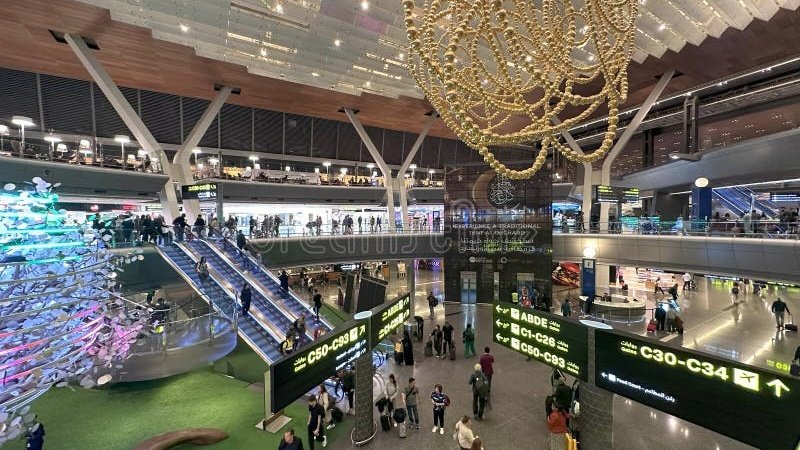
III. What Traffic Numbers Cannot Measure
Airport rankings provide a clear view of scale. They count passengers, seats, destinations, cargo volumes and aircraft movements.
These figures are useful. They do not reveal how deeply a hub has entered the planning of actors beyond it.
Two airports may handle similar passenger volumes while serving very different functions. One may depend mainly on the population and economy surrounding it. Another may assemble journeys between distant markets that lack sufficient demand for direct services.
Passenger numbers alone cannot show how difficult the network would be to reproduce elsewhere.
That requires a different set of questions.
How many passengers could be rerouted immediately? Which airports possess spare capacity at the correct hours? Are equivalent traffic rights available? Would alternative routes require another connection? Which destinations would lose frequency? How quickly could airlines reposition aircraft and crews?
An alternative may exist on paper while remaining commercially weak or operationally impractical.
A passenger moved from a one-stop itinerary to a journey involving two connections still reaches the destination. The character of the journey changes. Travel time rises. Baggage risk increases. The fare may become more expensive. Frequency may fall from daily service to several flights a week.
The network has not collapsed. Its usefulness has declined.
The same logic applies beyond individual passengers. A company choosing a regional headquarters may value direct access to clients, investors and staff. A hotel development may depend on stable international arrivals. A conference industry may rely on delegates reaching the city without complex itineraries.
When connectivity deteriorates, these activities rarely disappear at once. Their assumptions begin to change.
Such dependencies are dispersed across the economy. Airlines understand schedules and connection banks. Airports see capacity constraints. Governments negotiate access. Companies know how transport affects location decisions. No single institution sees the complete pattern.
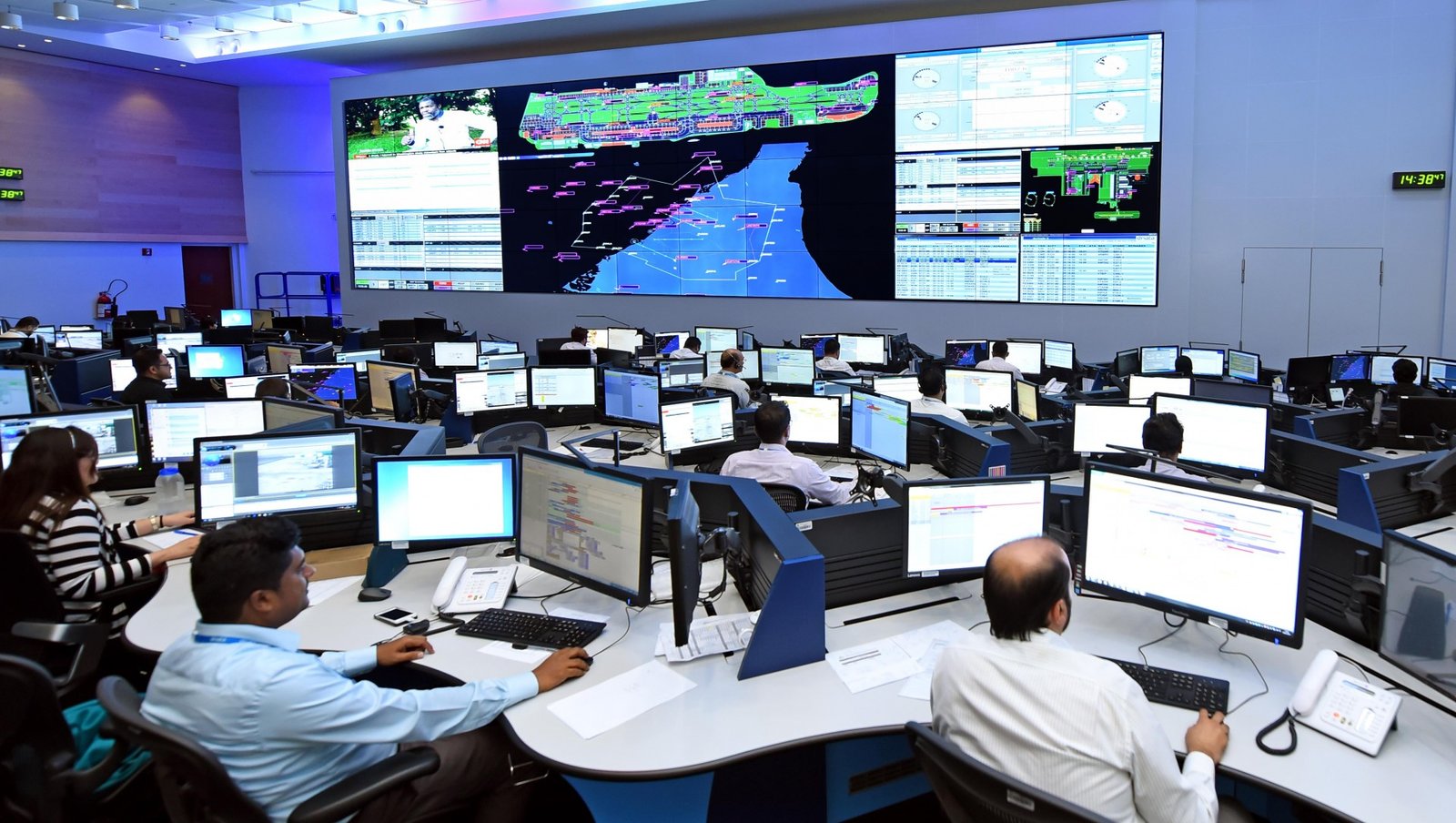
The strategic position of a hub lies in this accumulation of external assumptions.
Substitutability remains central to the analysis. Aviation is a competitive system with rival routes and alternative nodes. Dubai competes with Doha, Abu Dhabi, Istanbul, Riyadh and major European and Asian airports. Passengers can choose other itineraries. Airlines can reorganise networks.
This separates aviation from infrastructure with monopoly characteristics.
A state controlling a unique financial channel, a critical semiconductor technology or an unavoidable maritime passage can impose costs that an aviation hub usually cannot. A hub rarely prevents movement between two regions. Its absence makes that movement less efficient.
This limit does not make aviation irrelevant as an instrument of influence.
Power can reside in the ability to shape available choices, lower certain costs and make alternatives more difficult. Aviation gives small states limited coercive authority over major powers. It gives them access, visibility and a larger role in the organisation of international exchange. These advantages can support investment, diplomacy, tourism and economic diversification.
Their significance depends on degree.
A hub sustained by abundant local demand may be commercially successful without becoming structurally important beyond its region. A hub whose schedules connect underserved markets, support corporate location decisions and influence airline planning occupies a different position.
The relevant measure is the amount of reorganisation required when the system becomes unavailable.
That reorganisation has several dimensions.
Rival airports need sufficient runway, gate and terminal capacity. Airlines must assign aircraft and crews to new schedules. Traffic rights and airport permissions may not transfer automatically. Alternative routes must attract enough passengers to remain commercially viable.
Time is equally important. A network developed over decades cannot necessarily be reconstructed within the period in which companies, passengers and governments need it.
No single barrier makes a hub indispensable. Together, they create friction.
That friction is the source of aviation-based influence.
It can erode rapidly. New aircraft make longer nonstop routes economical. Rival states subsidise competing hubs. Political disputes restrict access. Airlines fail or consolidate. Passenger preferences change.
A terminal may remain crowded after the strategic position behind it has begun to weaken.
Traffic figures often reveal this late. Volume can persist while network quality declines. Connections become less convenient. Frequencies fall. The mix of destinations changes. Companies begin to value alternative locations more highly.
Infrastructure is durable. Structural relevance is not.
IV. Curated Sovereignty
Imagine that one of these hubs stops functioning tomorrow morning.
The runways remain visible. The terminals are intact. The state has lost no territory.
Within hours, aircraft begin arriving at airports unprepared to receive them. Passengers miss onward flights. Airlines search for slots, gates and crew rotations. Freight is delayed. Hotel bookings are cancelled. Meetings are postponed. Routes that appeared simple the previous day become longer, more expensive or temporarily unavailable.
The network would adapt.
Rival hubs would absorb additional traffic. Airlines would alter schedules. Passengers would find other routes. Capacity would gradually move elsewhere.
The interruption would still reveal how much external planning had assumed the hub's continuity.
That is the terrain of curated sovereignty.
Curated sovereignty is the deliberate use of sovereign capabilities—diplomacy, law, infrastructure, regulation and institutional coordination—to build a position inside international movement whose reach exceeds the state's territorial scale.
The concept does not equate passenger management with sovereign authority over foreign states. Territorial sovereignty remains the legal power exercised over borders, airspace, institutions and population.
Curated sovereignty concerns what a state constructs from those powers.
The UAE's diplomatic authority helps secure the traffic rights on which Dubai's hub depends. Qatar's public institutions sustain an airline and airport whose reach exceeds the country's domestic market. Singapore's regulatory system gives its transport infrastructure value beyond physical capacity.
In each case, the state arranges its institutions around an external function. Other actors gradually organise choices around the expectation that this function will remain available.
The influence produced by that arrangement is conditional. It depends on performance. Reputation, capital expenditure and favourable geography cannot preserve it indefinitely.
A hub loses value when connections weaken, access becomes uncertain or alternatives offer comparable reach with lower cost and greater confidence. Its position must be earned repeatedly.
Small states cannot dictate the structure of the international system. They can decide where within that structure they intend to become useful.
The most successful organise movement so consistently that their role recedes into the ordinary operation of the world.
Their power becomes visible when that movement stops.
— The Dubai Curator
Selected Sources
International Civil Aviation Organization (ICAO) — Manual on the Regulation of International Air Transport
Doc 9626, Third Edition, 2018. Reference framework for bilateral air-service agreements, traffic rights and the regulation of international air transport.
International Air Transport Association (IATA) — Freedoms of the Air
Overview of the traffic rights granted through air-service agreements, including the combination of third- and fourth-freedom rights underlying sixth-freedom traffic.
Qatar Airways Group — Annual Report 2017–2018
Documents the operational and commercial effects of the regional blockade, including the loss of destinations and the reduction in departing capacity.
Qatar Airways Group — Sustainability Report 2017–2018
Records increased fuel consumption resulting from airspace restrictions and the immediate loss of eighteen destinations in the blockading states.
Qatar Airways Group — Annual Report 2018–2019
Provides further evidence of the financial and operational consequences of the blockade during its first full financial year.
UAE General Civil Aviation Authority — Civil Aviation Legislation and Institutional Mandate
Establishes the GCAA as the federal body responsible for regulating and overseeing civil-aviation activity in the United Arab Emirates.
Government of Dubai — Dubai 2040 Urban Master Plan
Structure Plan: Executive Summary, 2024. Sets out the emirate's long-term framework for integrated urban development, population growth, connectivity and the organisation of major urban centres.
Civil Aviation Authority of Singapore — Annual Reports and Corporate Publications
Institutional record of Singapore's air-hub development, regulatory coordination, air-navigation functions and aviation strategy.
World Bank — Connecting to Compete 2023: Trade Logistics in an Uncertain Global Economy
Comparative framework for assessing logistics performance, reliability, infrastructure and the institutional conditions that support international movement.
Author's Note
Questions for Future Research
How can the strategic value of an aviation hub be measured beyond passenger volume, route count and connectivity rankings? — Existing metrics capture scale. They do not reveal how deeply a hub has entered the planning of external actors or how much reorganisation would be required if it became unavailable.
At what point does reliance on a hub become sufficiently embedded that rerouting imposes meaningful economic, institutional and political costs? — The threshold between convenience and structural dependence is rarely identified before disruption occurs.
How resilient is curated sovereignty when the permissions, airspace access and diplomatic relationships supporting the network are disrupted? — The blockade of Qatar demonstrated both the vulnerability and the adaptability of aviation-based influence.
Can the aviation-based strategies developed by Dubai, Doha and Singapore be replicated by other small states, or do they depend on conditions that are inherently difficult to reproduce? — The question concerns whether curated sovereignty is a transferable model or a historically specific achievement.
Related Concepts
Curated Sovereignty — The deliberate organisation of sovereign capabilities to create influence through the continuity of international movement.
System Continuity — The institutional, regulatory and operational conditions that allow complex systems to remain functional over time.
Strategic Intermediation — The creation of value by positioning a state, institution or infrastructure between global actors rather than competing directly with them.
Infrastructure as Governance — The use of physical and institutional infrastructure as an instrument of coordination, predictability and influence.
Access as Power — The ability to shape outcomes by organising, facilitating or restricting access to critical networks rather than exercising direct control.
Network Centrality — The strategic importance derived from occupying a highly connected position within international systems.
Permission Architecture — The legal, diplomatic and regulatory frameworks that determine how international movement is authorised, coordinated and sustained.
Reliability as Strategy — The deliberate cultivation of predictability and operational trust as a long-term geopolitical and economic advantage.
Hub State — A state whose influence derives primarily from organising international flows of people, capital, goods or information rather than territorial scale.
Interdependence — The reciprocal relationships through which states, institutions and infrastructures become increasingly dependent on one another for continuity.
Curated Sovereignty examines strategic questions whose answers are still emerging.