Infrastructure · Aviation · Sovereignty
The Unseen Runway
Where Aviation Becomes Sovereignty
Behind the exhibition halls at Dubai World Central, an engineer places a model of an electric air taxi on a table.
He can explain its motors, batteries, range, redundancies, and the conditions under which it can remain airborne. The officials across from him are concerned with another set of problems: what happens if the data link fails above a city; who assigns the corridor; how the aircraft will be separated from helicopters, drones, and conventional traffic; which authority will recognise its certification; and who assumes control when the unexpected occurs.
The engineer may have built the aircraft. The state must still build the world around it.
This is the unseen runway.
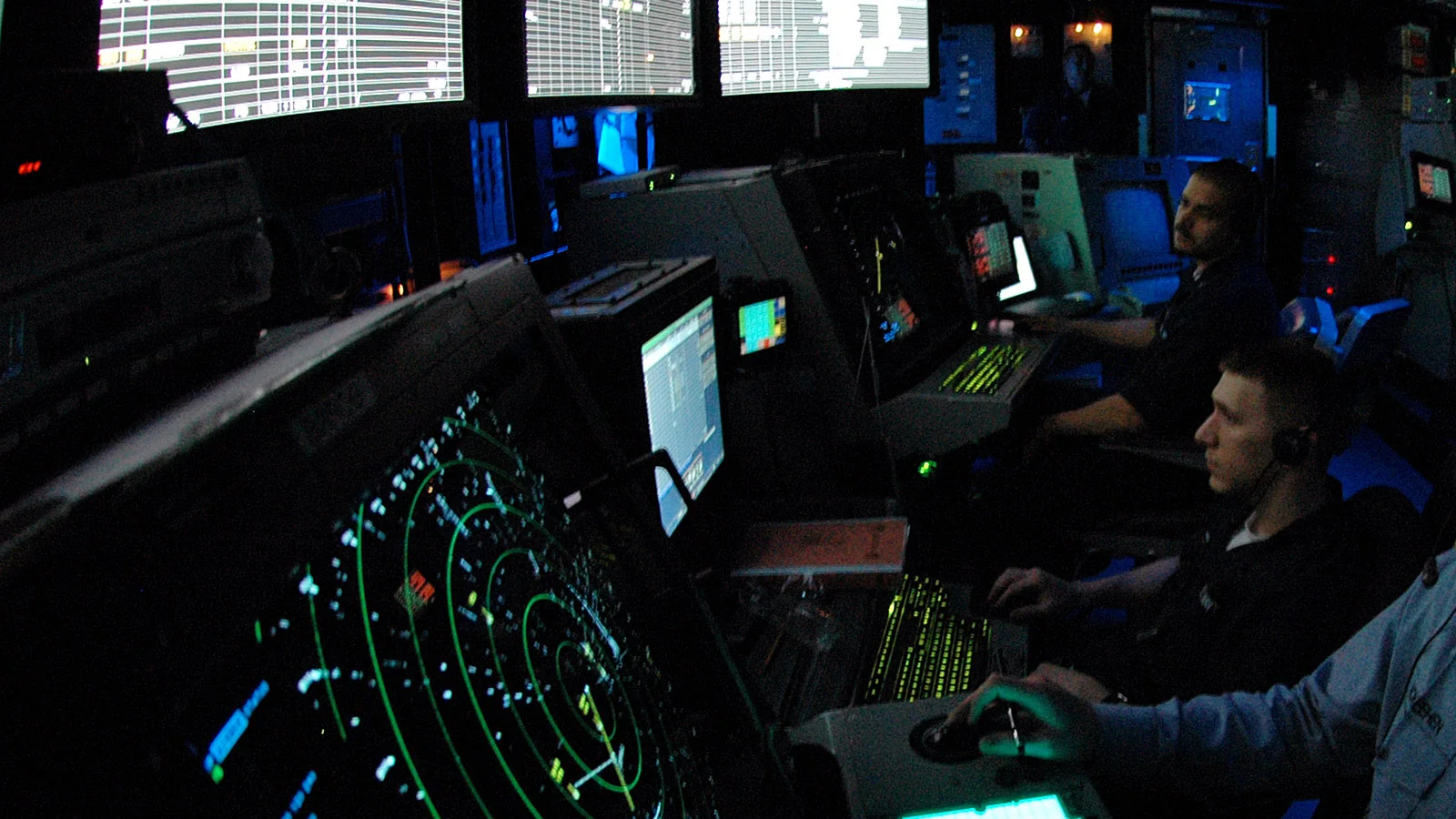
In November 2025, the global aerospace industry assembled in Dubai for an Airshow of exceptional scale. More than 1,500 exhibitors participated. Military and civil delegations arrived from 115 countries. Organisers had projected more than 200 aircraft for the static and flying displays, while announced deals, by the organisers' count, surpassed $202 billion, twice the reported volume of the 2023 edition.
Beyond their commercial scale, the figures exposed a structural fact: aviation remains one of the few systems in which states, manufacturers, militaries, financiers, regulators, and infrastructure operators must inhabit the same institutional space. The aircraft occupied the foreground; the future was being negotiated behind it.
Every major order announced at an airshow depends on the continued availability of airspace, airport capacity, finance, maintenance, insurance, training, and certification long after the ceremony has ended. Advanced air mobility exposes that dependency.
A conventional airliner enters an institutional environment constructed over decades. Its routes, airports, separation rules, maintenance standards, and certification pathways are already legible. An autonomous aircraft or electric vertical-take-off vehicle enters a sky that has not yet been fully designed for it.
The machine may exist before the category that gives it legal and operational meaning.
The traditional understanding of air sovereignty is territorial. A state controls the airspace above its territory, determines who may enter it, and exercises that authority through law, diplomacy, defence, and bilateral agreements. That definition remains valid, yet practical control now extends beyond it.
Modern access continues after an aircraft crosses the border. It depends on whether an operator can be recognised, whether its data can be interpreted, whether its trajectory can be coordinated, and whether its presence can be integrated safely into a crowded operational environment.
Sovereignty has acquired an operational layer.
In earlier eras, the decisive act was visible: a treaty was signed, a route opened, a runway inaugurated. The new layer appears in technical requirements, certification pathways, data permissions, and the ability of separate institutions to recognise the same event in the same way. Its authority is distributed across systems, yet its effects are immediate. An operator that the architecture cannot interpret remains present in theory and unusable in practice.
Territorial sovereignty answers whether an aircraft may enter. Operational sovereignty determines whether it can function once admitted.
The distinction matters because future aviation will be governed through continuous interaction rather than occasional permission. A vehicle will need to authenticate itself, communicate intent, receive updated constraints, and remain intelligible to several authorities throughout flight. Control becomes persistent, extending across the full duration of participation.
At this level, power is exercised through definitions: what constitutes an authorised vehicle, which information must be exchanged, how separation is calculated between piloted and uncrewed traffic, and which institution becomes authoritative when two systems disagree.
These questions appear technical because they require technical answers. Each answer nevertheless shapes who may participate, under what conditions, and at what cost.
The UAE is building an environment in which such questions can be tested. Days before the 2025 Dubai Airshow, the Technology Innovation Institute and ASPIRE, both within Abu Dhabi's Advanced Technology Research Council, announced a joint initiative with the General Civil Aviation Authority to inform data-driven and simulation-based regulation for advanced air mobility. The programme covered safe air corridors, vehicle separation, coordination between conventional and uncrewed traffic management, and regulatory advice, with field simulations at Yas Island, Zayed Port, and Zayed International Airport. Dubai provided the global stage; Abu Dhabi supplied much of the experimental infrastructure; the federal aviation system connected those efforts to national airspace.
Proximity is the advantage. Research can be tested near regulators, operational evidence can shape administrative judgment, and capital can support infrastructure before commercial certainty exists.
Proximity offers no guarantee of leadership. Its advantage is the shorter institutional distance between invention and permission, often decisive in determining whether a technology remains demonstrative or becomes deployable.
A runway transforms speed into lift by creating a controlled relationship between machine, ground, and distance. Its institutional equivalent performs a similar task: it allows emerging technology to accelerate within the boundaries of safety, law, finance, and public authority.
In February 2026, the General Civil Aviation Authority published an aeronautical information circular announcing the operational implementation of a System Wide Information Management interface and gateway portal by Dubai Air Navigation Services. The system enables authorised users to exchange aeronautical, meteorological, and flight information through internationally recognised data models, while official state publications remain the authoritative source.
The platform does not grant permission to fly. It makes parts of the aviation environment machine-readable, interoperable, and consistently interpretable across institutions.

Its surface is made of standards: a physical runway allows an aircraft to depart; a digital information architecture enables multiple systems to understand the same operational reality.
That shared picture becomes more important as the sky acquires new layers. Conventional traffic follows established routes and procedures; autonomous systems may operate at lower altitudes, with greater frequency, and with decisions updated continuously.
The real test is the coexistence of systems built on different assumptions about control, responsibility, and reaction time. A state capable of reconciling those assumptions can convert complexity into capacity rather than congestion.
Without a shared operational reality, scale becomes fragile. Every additional operator, vertiport, drone corridor, weather feed, and autonomous decision system increases the number of possible misunderstandings. Standardisation reduces that ambiguity and gives authority a form that institutions and machines can execute.
The language of aviation has always carried power. For most of the twentieth century, it was expressed through certification, navigation rules, bilateral rights, airport slots, and safety procedures. The emerging era adds digital identity, automated authorisation, real-time trajectory exchange, and algorithmic assurance. A state that develops competence across these domains can influence the conditions under which a new market becomes possible.
This power should not be overstated. No state writes the language of global aviation alone. International civil aviation depends on jurisdictions recognising common rules, exchanging information, and accepting one another's safety systems. International organisations, national regulators, certification authorities, manufacturers, and air-navigation providers remain deeply interdependent.
An approval confined to the environment that issued it may carry a vehicle through a trial and no further. A vehicle may satisfy a domestic sandbox and remain commercially immobile if another jurisdiction does not recognise its certification, data architecture, or allocation of liability. Technical success can therefore reach the edge of the regulatory system and stop.
The UAE cannot simply replace frameworks developed in Washington, Brussels, Montreal, or elsewhere with a sovereign technical language of its own. Its strategic opportunity is to become one of the places where shared standards are tested under real operating conditions, financed early, and connected to public authority.
That role is valuable because it reduces the distance between experimental technology and regulated operation. It also gives the UAE influence over how international rules are interpreted in practice, even when it does not control their formal origin.
The strongest systems secure autonomy by making themselves indispensable to the networks on which they also depend. Influence, in this setting, comes from being a credible site of convergence: a place where global standards, sovereign priorities, industrial capacity, and commercial demand can meet without one fully absorbing the others.
Dubai's aviation model already reflects this logic. The Investment Corporation of Dubai holds a portfolio spanning airlines, ground and travel services, and aircraft leasing through Emirates, dnata, flydubai, and Dubai Aerospace Enterprise, creating exposure across several functions through which global movement is financed, serviced, and operated.
Abu Dhabi has developed complementary depth through strategic research, aerospace manufacturing, maintenance, investment, and advanced-mobility testing. Dubai provides a dense commercial platform and global convening power; Abu Dhabi contributes industrial capacity and experimentation; federal regulation links these ambitions to national airspace. Their differences remain visible, as does their combined effect.
Together, they point toward a broader evolution in statecraft. The infrastructure state was once defined primarily by ports, roads, pipelines, airports, and power grids. Its next form is also defined by protocols, certification pathways, simulation environments, and information models. Concrete remains essential, yet autonomous systems require an additional capacity: the ability to make complex technologies institutionally legible.
Legibility is power because what cannot be recognised cannot easily be authorised. An aircraft may be technically capable, commercially financed, and publicly displayed. Until the system can identify it, communicate with it, separate it from other traffic, assign responsibility for it, and respond when it fails, the aircraft remains outside ordinary operation.
The future contest in aviation will therefore be fought through more than range, speed, efficiency, or fleet size. It will also turn on the ability to transform innovation into authorised movement.
Who can test without weakening safety? Who can connect sovereign authority to interoperable global systems? Who can move a technology from demonstration to dependable service?
These are the conditions on which modern flight increasingly depends. Aviation has always concerned the conditions under which movement can be repeated, trusted, financed, and connected to the world. Those conditions now extend beyond airports and ministries into digital interfaces, simulation models, certification systems, and continuously updated operational data.
Dubai has not written the final grammar of future aviation. No one has. The UAE is assembling enough of the institutional sentence—capital, regulation, infrastructure, research, data, and convening power—to participate in writing what comes next.
The unseen runway begins beyond the concrete, in the institutions that decide whether a technology can become a trusted part of the sky.
— The Dubai Curator
Selected Sources
Government of Dubai Media Office, Dubai Airshow 2025 attracts over 248,000 visitors with deals surpassing USD 202 billion, 24 November 2025. Official source.
Dubai Airshow, Dubai Airshow 2025 will gather global trailblazers, disruptors, and decision-makers across aviation, space, and defence, 7 October 2025. Official source.
Technology Innovation Institute, UAE Among Global Pioneers in Developing Regulations for Autonomous Flying Taxis and Delivery Drones, 10 November 2025. Official source.
Emirates News Agency (WAM), report on the TII-ASPIRE-GCAA advanced air mobility initiative, 11 November 2025. Official source.
General Civil Aviation Authority, AIC A 02/2026: System Wide Information Management (SWIM) Interface and SWIM Gateway Portal - Implementation by DANS, 5 February 2026. Official circular.
Investment Corporation of Dubai, Annual Report 2024. Official annual report.
Dubai Aerospace Enterprise (DAE) Ltd, Results for the Year Ended 31 December 2023, Note 1, p. 11. Official financial results.
Author's Note
This essay draws on publicly available institutional data, regulatory publications, and industry disclosures concerning aviation, advanced air mobility, sovereign investment, and digital airspace infrastructure. Its argument is interpretive: that a growing share of aviation power is exercised through the institutional systems that make movement recognisable, interoperable, and repeatable.
The opening scene is a composite illustration of the questions advanced air mobility raises for regulators, not an account of a specific meeting.
Questions for Future Research
How much regulatory experimentation can be converted into recognition across jurisdictions?
How should operational sovereignty be measured when the standards governing access remain internationally shared?
Can a state's role as an early testing environment produce durable influence over the rules that later govern commercial deployment?
Which institutional dependencies become visible only when autonomous systems move beyond controlled trials?
Related Concepts
Operational Sovereignty — Authority exercised not through territory alone but through the systems that determine whether movement can be recognised, coordinated, and sustained.
Institutional Legibility — The degree to which a technology, operator, or transaction can be read, classified, and authorised by the systems that govern a given environment.
System Continuity — The capacity of an operational architecture to preserve movement, recognition, and coordination across jurisdictions as conditions change. Related to the Architecture of Continuity (The Invisible Architecture of Power) and Corridor Continuity (The Corridors).
Protocol Architecture — The layered structure of standards, interfaces, and permissions through which complex systems become interoperable and governable.
Curated Sovereignty examines strategic questions whose answers are still emerging.